
🌈When I first stepped into the street of Ray of Lights, I’m astonished by this dazzling neon cafe that is housed on the ground floor of a cute little Dutch house on the corner of Breedstraat.
🏘️Situated at the centre of the old town of Alkmaar, the dynamic neon signs in the studio-cafe add colourful charm to the historical buildings. 🏃♀️The wide-open window shop front with the neon working table also welcomes passersby to speculate about the fiery neon-making process on the street.
🤓When I arrived at Ray of Lights, Remy greeted me warmly and passionately introduced his experimental neons to me one by one. 🚀The neon art he created unlocked my imagination on the possibilities and potentials of neon – how he used the glass blowing technique and plasma to create different striking works… 🤯he even turned some old glass vessels/containers into a neon art piece!
🩵I had planned to make a wiggly wobbly heart and had my first touch in blowing neon glass tubes into a different shape for my first-hand proper neon-making experience. 🤓Remy was extremely generous in teaching me his skills and knowledge of neon making from the first minute we start the class. 👨🔬He explained the science and physics of neon making with drawings patiently.
😱The tools that Remy used are also quite different from the ones I saw in Hong Kong. Rather than the 5-point heads that I saw in Master Wong’s studio in Hong Kong, he uses double crossfires with knife heads, and a ribbon burner that is equipped on car wheels. ❤️🔥At one point, he also uses a single torch to anneal the neon tube. With his benevolent teaching, I managed to make my first experimental neon piece – “Wobbly Heart”!🩵

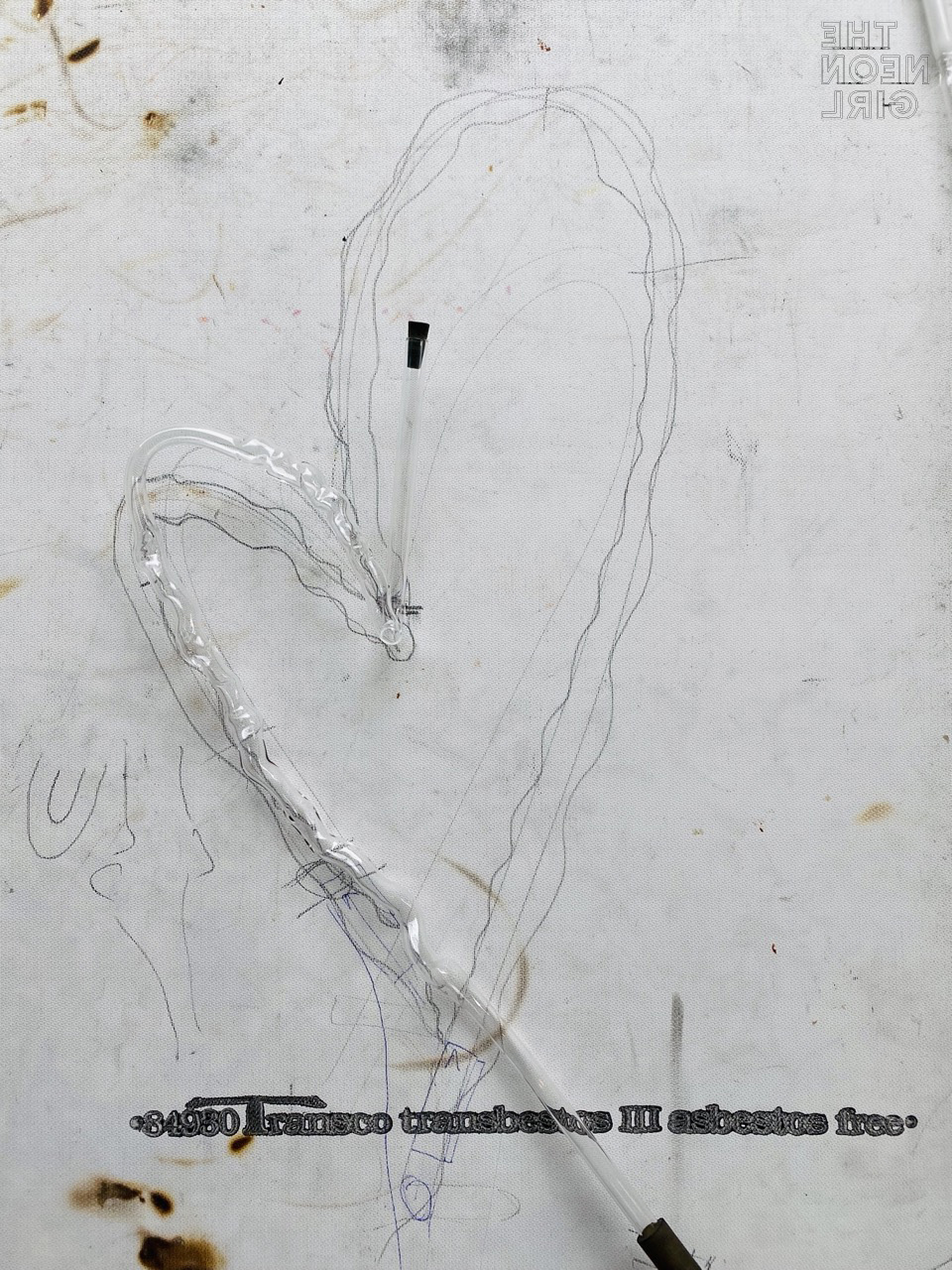
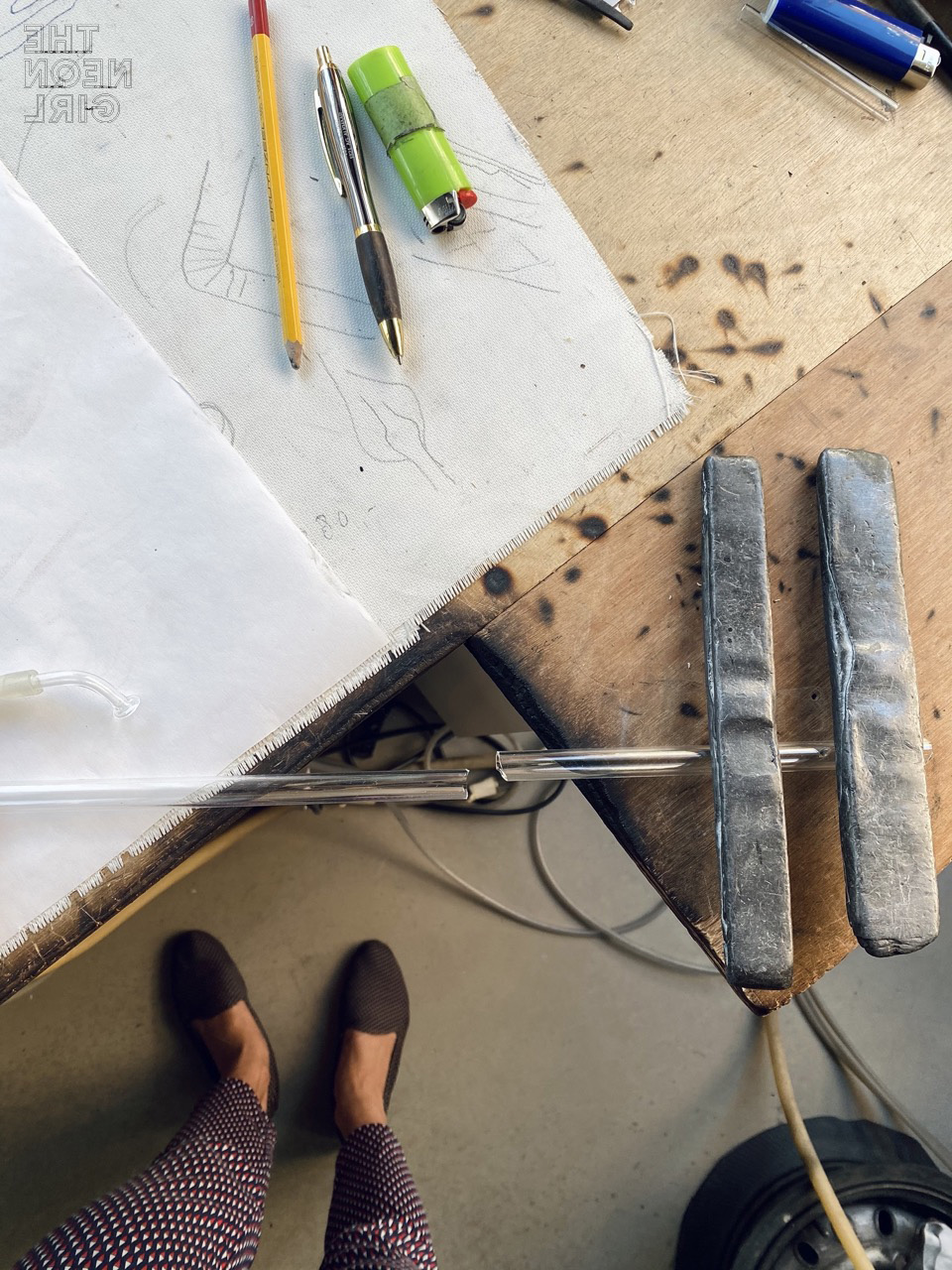


My second encounter with Remy was when I was stranded in the Netherlands due to the Covid travel restrictions in Hong Kong in the summer of 2021🦠😫 Remy was again very generous and accepted me as an apprentice for a month😇 I have learnt so many different things from him during that period, that includes: how to fix a broken and old neon, how to bend organic neon shapes, a sneak peek into German and Dutch bent and how to powder the neon tube with phosphor powder in the Dutch way… Yes the Dutch way😏🇳🇱
Traditionally, European neon benders would bend the patterns with clear glass tubes. They would then fill the tube with a thin layer of glue, and then another layer of phosphor powder to give neon tubes colour after they are bombarded. 🌈Depending on different benders, they might use different methods for this process.
🧽 With Remy, he first cleans the tube with water and dries the bent tubes with a heat gun. He then runs and shakes the dried tube with glass pearls that have glue glued on to get a thin layer of glue in the inner wall of the tube. 💃We then need to shake the glass pearls out of the tube. The next step is to powder the phosphor powder inside the tube. I had a chance to help him do this part on a massive arch he was doing. I thought it was easy as a shape as “it’s just an arch right?” 🌈However, it still took me some time to run the powder all over evenly. We also found some scratches as I powder the powder and suspect the glass pearls from the previous steps were not cleared out completely and created some scratches…
What does it mean? It means we will have to clean the tube and redo the whole process – which has taken us 30-45 minutes already 😭
As you can see, one tiny mistake in this later process could cost more time and effort to redo😰
🤔 What are the benefits of it then? Why do Europeans use this methodology?


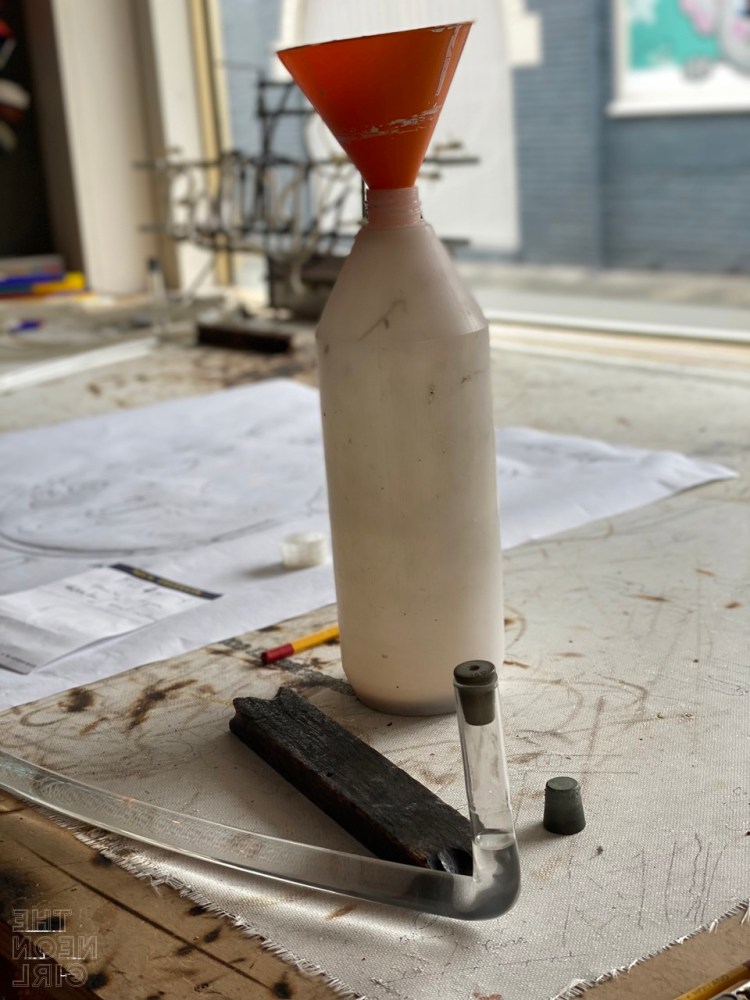
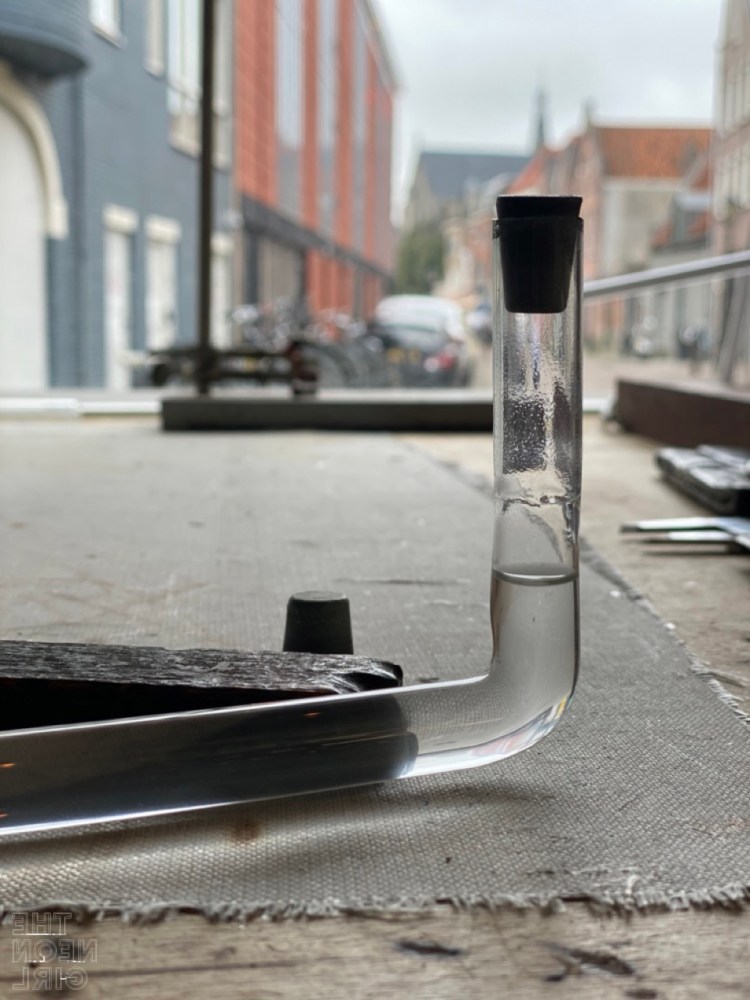


💭 Imagine if it was a neon tube with a complicated pattern containing lots of tight bends. It would mean a longer and harder process of the glue and phosphor and power to cover each twist and turn. ☝️HOWEVER, the welds between one tube to another would be seamless and avoid overheated bents to lose phosphors powder during the process. 👀I have also seen how Remy carefully planned a weld for it not to be seen in plain sight, even if the weld would be covered by blockage paint. Such thoughtful practice allows me to draw a correlation between the precision in European crafts making and their renowned luxury standard 💎
👀From my observation, some European benders still use this method with their background in scientific glass using borosilicate glass, which allows the glass to endure a high heating temperature. Hence, they can use this method.
In the Netherlands, there is a Dutch bent derived from this technique🇳🇱 It is a 90 angle with a sharp edge in the inner bent, and a rounded edge in the outer bent. The rounded outer bent would avoid mercury or phosphor powder to sit on the edge after years of operation.
🎨It also allows neon benders to mix their own colour, which is often limited by precoated powder tubes. I have heard numerous benders mentioning the inconsistent colours of neon tubes even if they were made in the same factory. However, it will also be hard for fixing to get the exact same colour.
😫 I was stranded out of Hong Kong in my second summer due to Covid. 👼I would like to thank my generous angels who housed me during that difficult times so that I can have a warm shelter and the opportunity to apprentice from Remy:
Jim, @rosajung , @genwagner , @miss__gg , @monique_cameron and @leungzeen 😘😘😘
Ray of Light Neonglasblazerij
Breedstraat 5,
Alkmaar,
1811 HE Netherlands
Full version of my Dutch experience on “The Neon Girl” book!
“The Neon Girl” is a cross-cultural neon light design, study and practice project that reaches 3 generations, 6 countries, and 2 genders.

1 comment