“The Neon Girl” was a cross-cultural neon light design, study and practice project that reaches 3 generations, 6 countries, and 2 genders.
When I started this project, I was the only active female neon light artist and practitioner in Hong Kong. With “The Neon Girl” project, I have been investigating and incorporating new technology in my design and make 6 distinctive pieces with 6 different neon light masters around the world.
Targeted to increase awareness and enrich female empowerment in the male-dominant neon industry, I wish to demonstrate the geographical, cultural and economic impact on neon light design and production through my new design work with new media and technology that gives new meanings to neon lights.
The heritage preservation on the technical skills does not limited to passing on from our local sifu – master of the crafts – to me, and also learning and absorbing new design, methodologies and skills that enrich our current local design and skill sets.
“The Neon Girl” Exhibition


I believe that the future of neon can stretch beyond its commercial value and embrace many other functions and purposes. To ensure that this enigmatic medium lives on we must push beyond conventional boundaries and embrace the risks involved in exploration and experimentation.
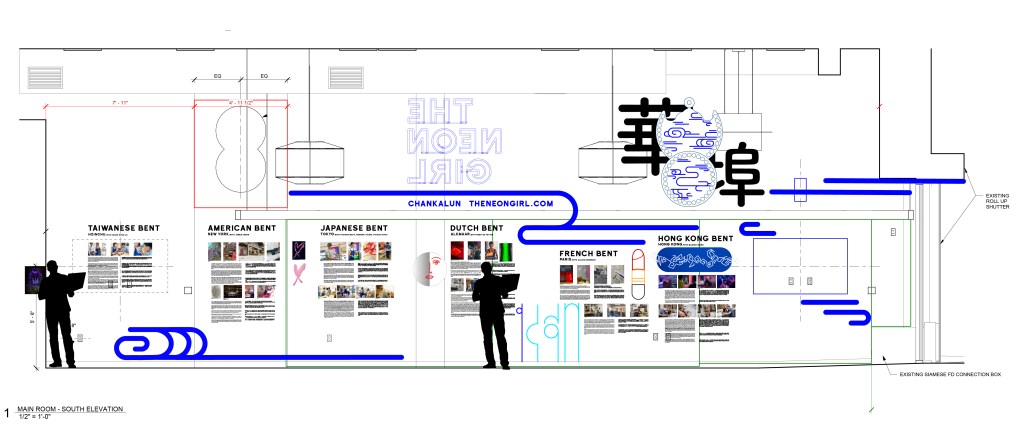
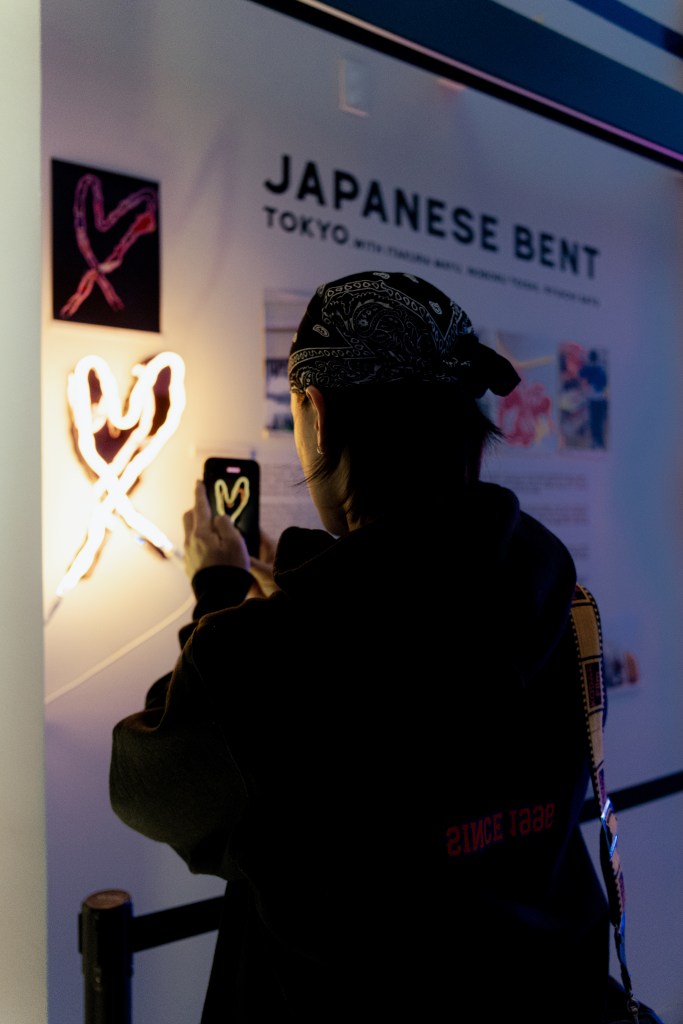
In “The Neon Girl” exhibition at “Welcome to Chinatown” Hub in New York is thoughtfully curated by CeeKayEllo (CKL), I am, for the first time, revealing the journey and the experimental works that I have designed and created under the mentorship of 9 different neon masters/benders/artists. These valuable experiences have significantly expanded my understanding of neon-making, design and its underlying science, helping to shape and grow my collections.
As viewers explore the different pieces and stories behind them, I hope they can glimpse the untapped potential and evolving future of neon.
The exhibition is categorised by “bents” because through the study of a bent, one can explore the different glass and techniques each country or region uses, and thus affect the tools and equipment, techniques and designs eventually.
Exhibition period: Oct 10, 2024 – Jan 9, 2025
Opening hours: 10:00-18:00 (Monday to Friday)
Address: “Welcome to Chinatown” Hub, 115 Bowery, New York, 10002
01 HONG KONG BENT
萬子
“萬子” are very unique and significant visual symbols that can be found in Hong Kong pawn shop signs. They are also usually very tight bents that represent the skills of Hong Kong neon benders.
For 萬子, I would like to give it a new contemporary look by tweaking the shape and the way of display.
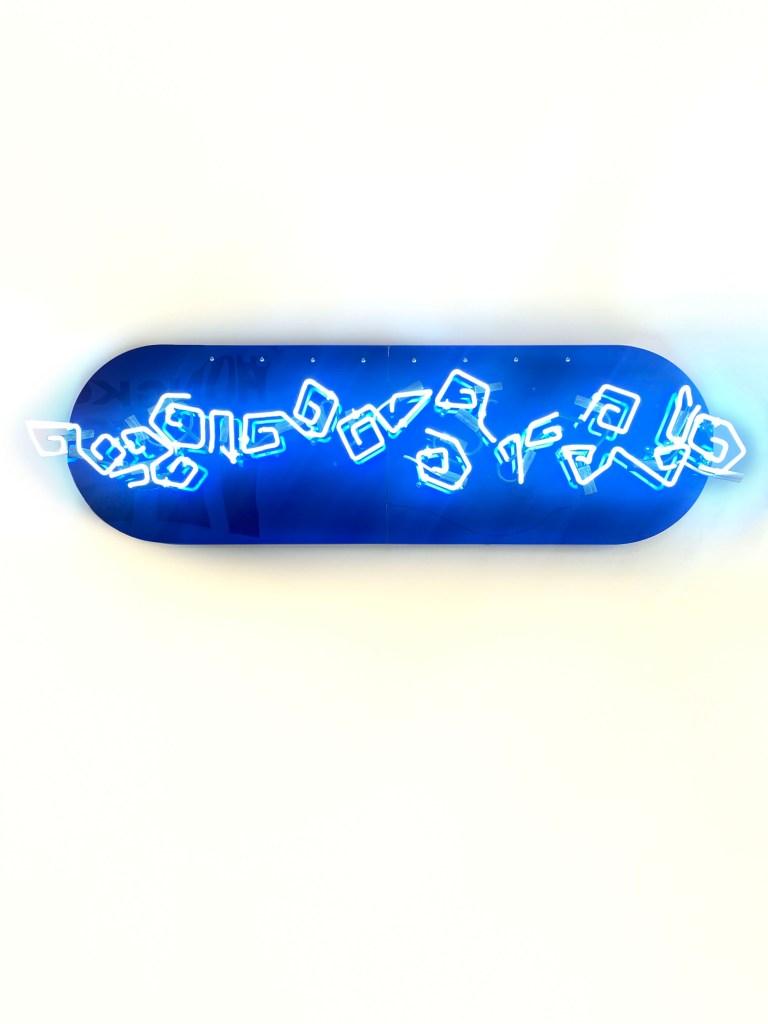
Photo: Chankalun
Master Wong, Hong Kong
Photo: Kit Cheng
Photo: Kit Cheng

Photo: Kit Cheng

Photo: Kit Cheng
Back in 2018, I was introduced to Master Wong through Clarissa, a friend who used to work with Master Wong’s daughter. We encountered because of the little passion project I organised and curated – My Light, My Hood. It was a group neon art exhibition where each artist used their medium to portray their favourite neighbourhood in Hong Kong, with an accent of traditional neon in their work. Through the communications between the artists and Master Wong, I have discovered the complicity of the multi-faceted neon making – an art mixed with science and physique. A craft that takes a decade to learn, and decades to become a Master. Through him, I learnt how to observe if a neon is bent nicely or not. Master Wong was 75 years old at the time. I still remember how impressive he was when I first saw how steady, strong yet flexible his arms and hands were once he started neon-making.
It took me numerous attempts to ask Master Wong’s daughter to persuade him to teach me neon-making. With the low accessibility to this crafts in Hong Kong, I’m glad that he finally accepted the invitation and taught me for 3 months with weekly classes.

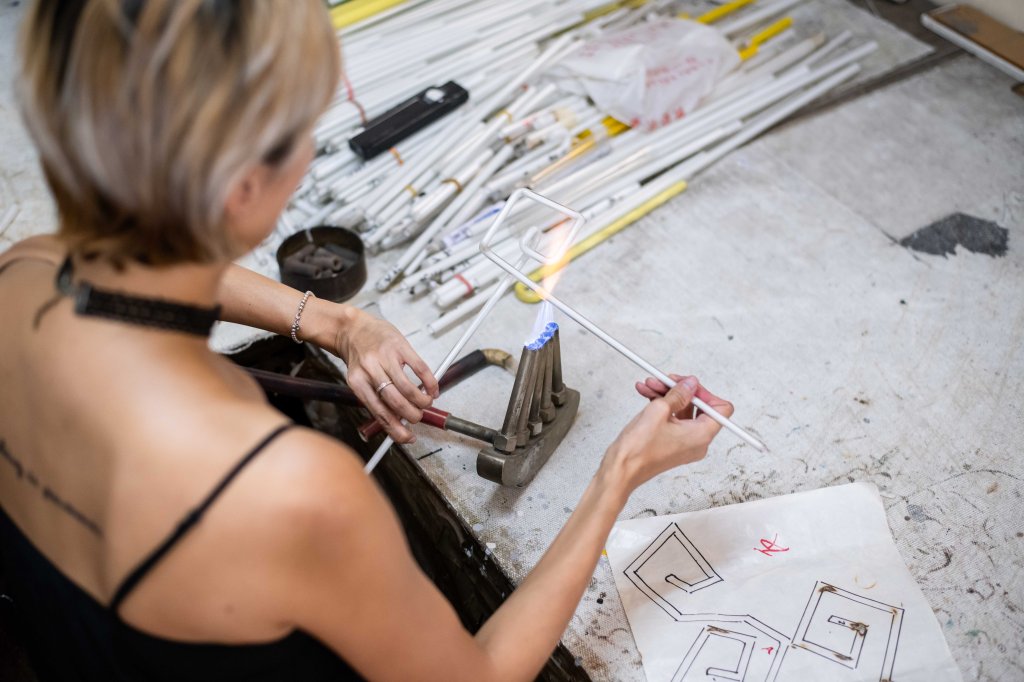

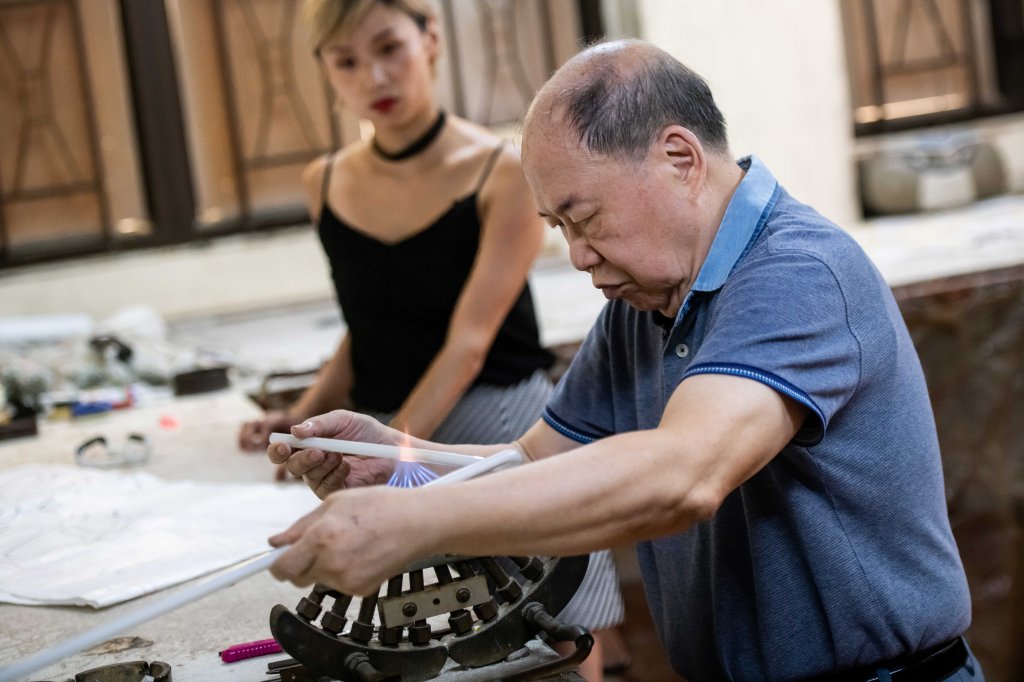
In our classes, he was one of the very few neon teachers who taught me how to bend neon without using a blowing hose. I have always admired the tight bents we find in Hong Kong Chinese character neon signs. We were practising a lot of those fundamental basic bents where they would be applicable in most designs. It was when I started bending without a hose, I realised how impatience my body is – I often move too fast and too much! He repeatedly told me it would take me years to learn and master the crafts – which I totally understand once I had my hands on. Due to his vast experience, he would find a lot of bending movement “easy”, and of course, it would take me days or even weeks to get comfortable with even a basic gesture and bend as a beginner. During our classes, Master Wong also uses a lot of specific and interesting terms to describe the glasses in different stages. 熟 (well cooked) – for heated glass; 乾 (dry) – for cooled down glass; 號 (number) to describe the diameter of glass in mm. We were working on the significant symbol of the pawn shop 萬子 with a contemporary design. The design looks small, but it also means that the tighter the bents they are, and the harder they are to make as the glass tubes are so close to each other!
Like many other countries that I visited through “The Neon Girl”, in Hong Kong, there have been no guidelines nor textbooks on the technique and science behind neon-making. This technique has always been a transfer of knowledge through demonstration, observation and self-initiated practices. Hence, I would also understand why it may not be easy for the local community to teach someone new: it would be difficult to know where to start, as the savour-faire is so multi-faceted and complicated.
Master Wong’s professionalism is also admirable – I witnessed numerous times how he would demand the best neon to be produced for the clients, even if it means a remake.
In Hong Kong, he’s a respectable figure in the industry, and it is definitely my honour to have been taught by him in my early neon journey, and have him helping me continuously in my other projects.
02 FRENCH BENT
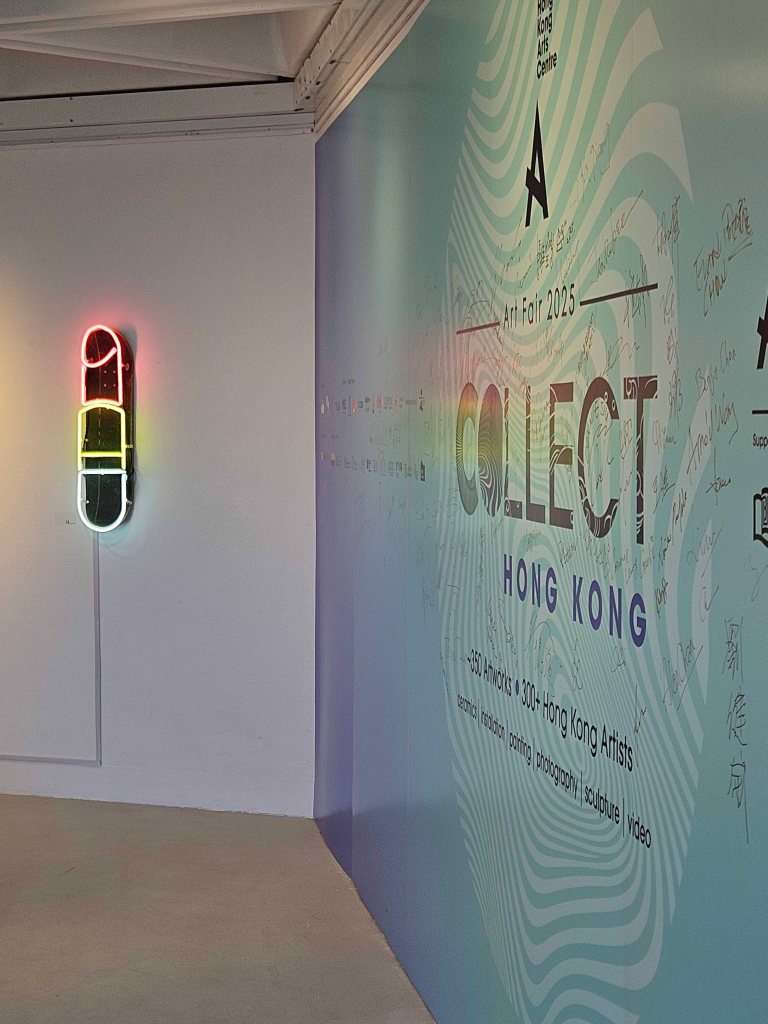
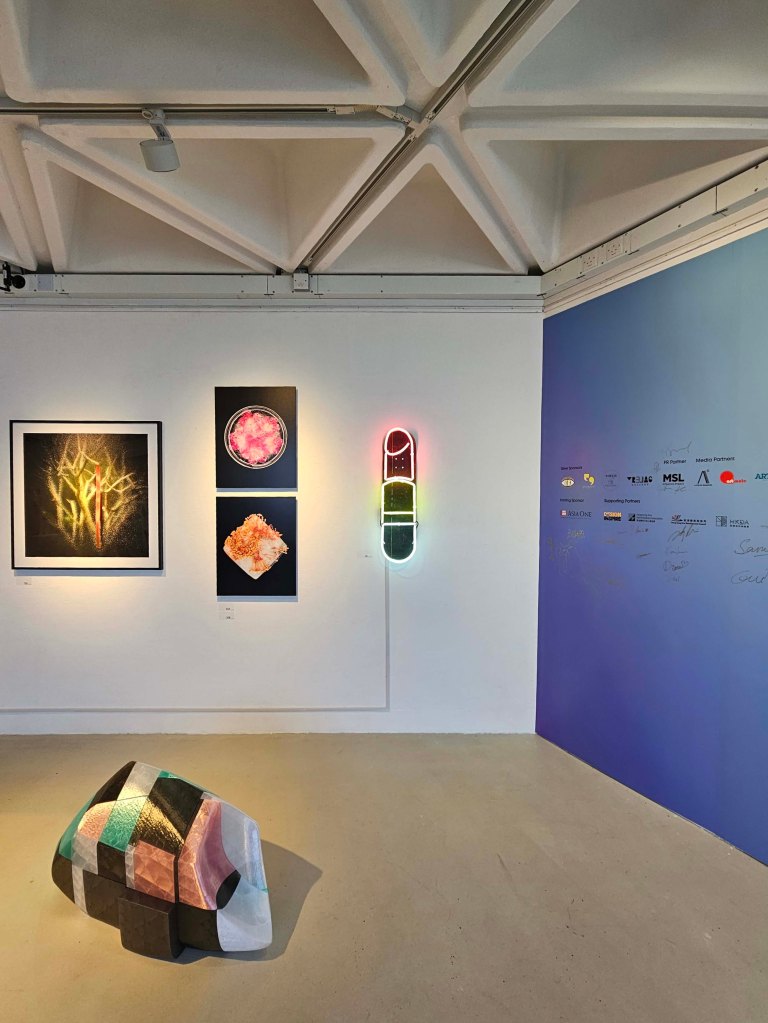
Lip-skate
To me, neon is a symbol of the streets—a visual language that pulsates with urban energy.
Lip-skate merges two seemingly distinct yet deeply expressive street icons: the effortless chic of Parisian women with their signature red lips and the emerging skateboarding culture in the city. The result is a playful yet striking fusion—a neon skateboard shaped like lips, embodying both the bold elegance of French style and the raw dynamism of street culture.

Photo: Chankalun
Alexis Dandreis, Paris
Do you know the science and technology of neon is invented in France back in 1910?
The tools and glass they use in France are very different from those of 99% of the world’s. So when I contacted Alexis, I was super eager and glad I am finally able to try borosilicate glass bending!

Most of them are also 3D sculptural too!
Photo: Chankalun

Photo: Chankalun
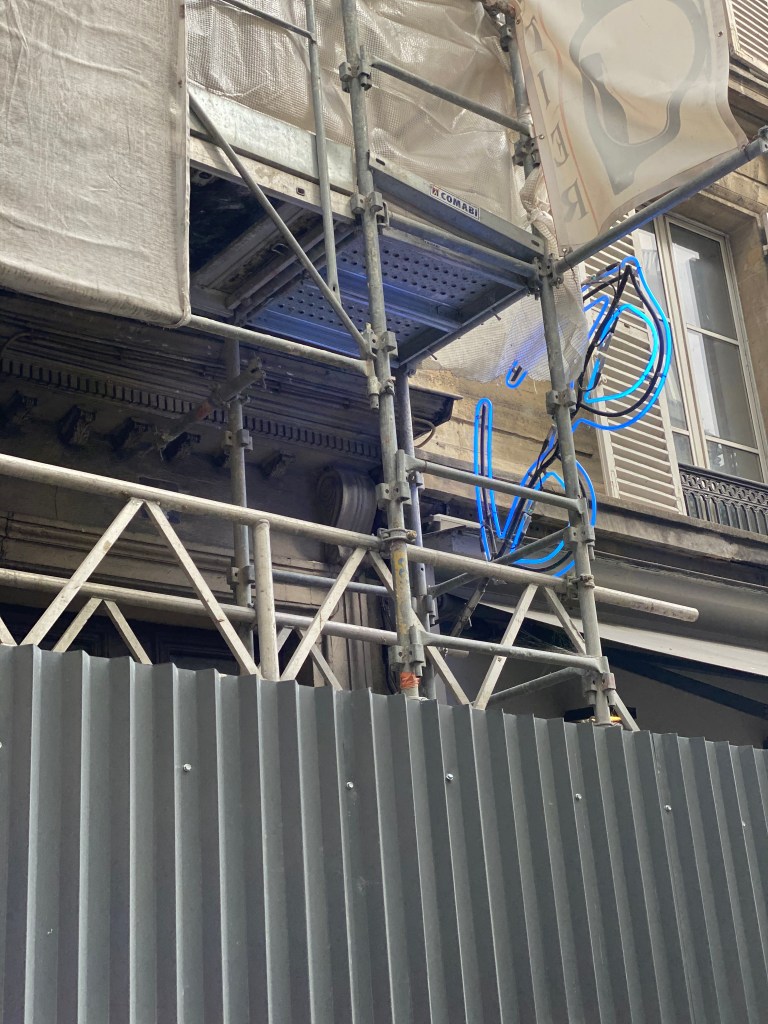
When I first saw it, I thought it was LED as the tube might break easily with an active construction right next to it. Surprisingly it is a glass neon sign!
How durable are French neon signs!
Photo: Chankalun
When I walked around Paris, I realised they had a lot of neon shop signs on the street, even more than in Amsterdam. I even saw a seasonal window at Saint-Germain with glass neon decoration rather than LED for the lower cost of a temporary display. I asked Alexis if this means the neon scene here is more active, and he said most of them might be neon that was made decades ago. As borosilicate glass is hard glass, it is more durable and could last up to 30 to 40 years! Hence it is quite a good investment for shop owners to have a glass neon shop sign.

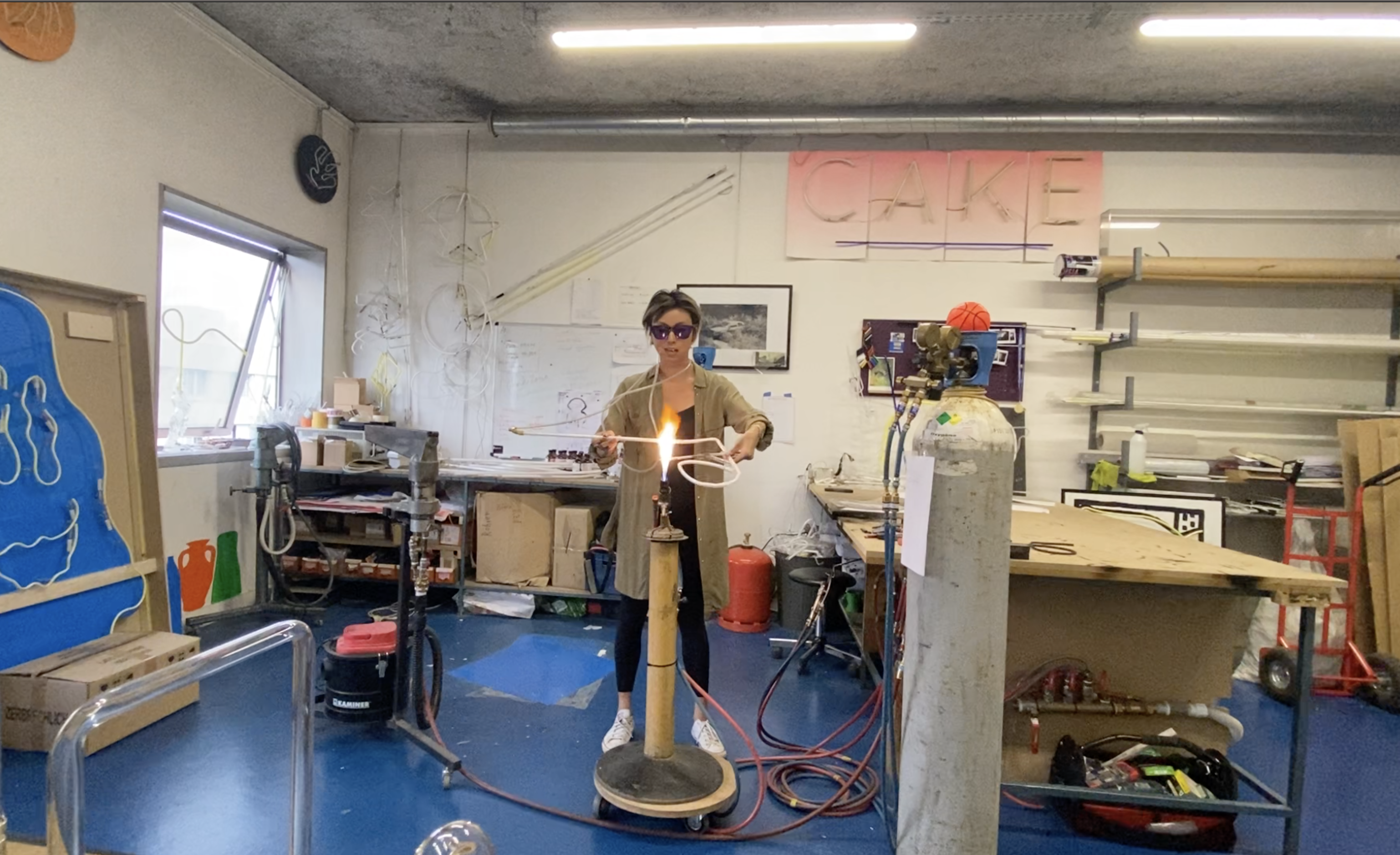
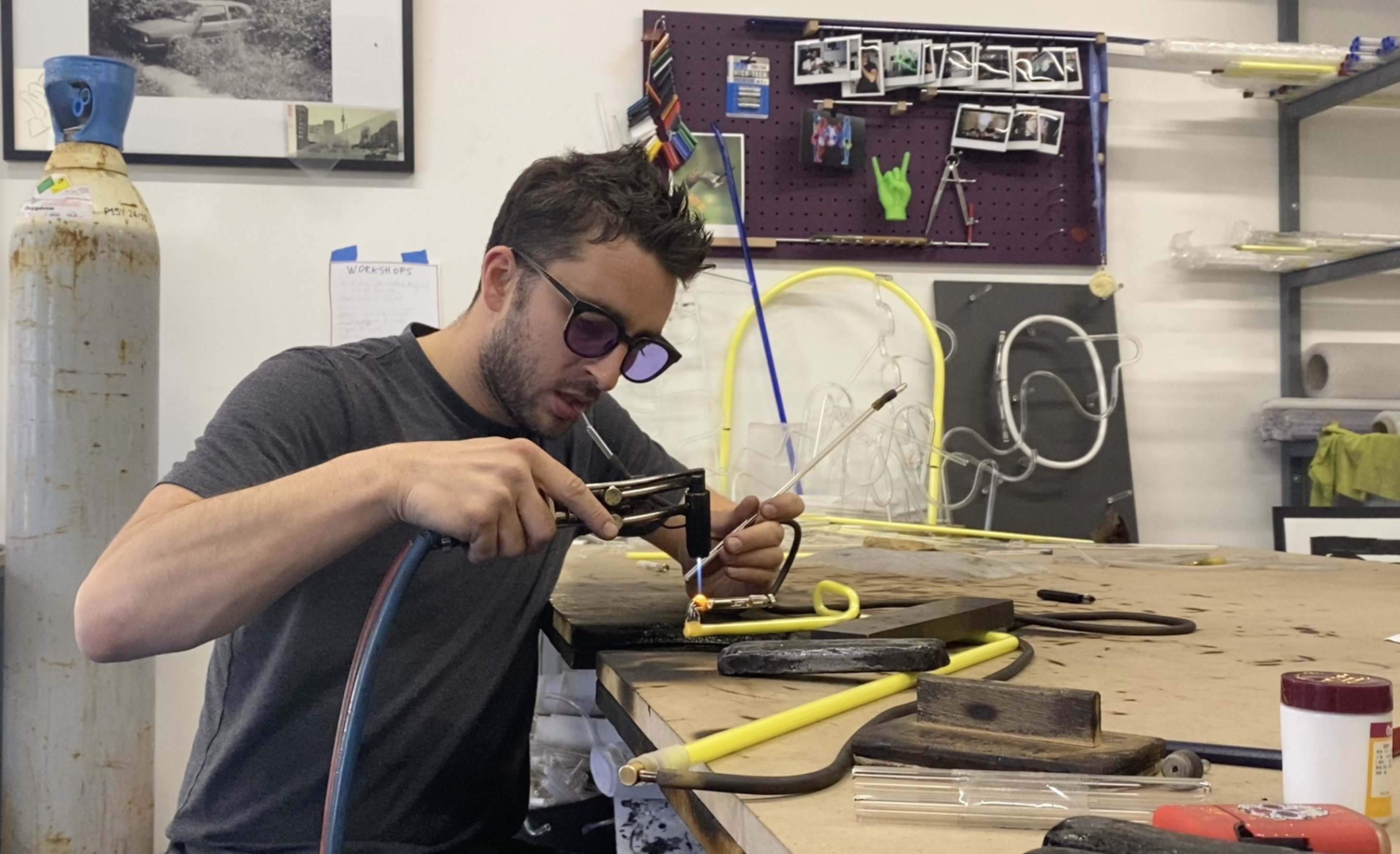
In France, 99% of the studio uses borosilicate glass – I have only been able to find one factory where they have one unit for soft glass bending. This is a hard glass that is commonly used for making scientific glass. Because it is harder, the burners French neon benders and artists use would be different and need more “power”. The single torch burner is different from the ones I use normally.
I enjoy bending borosilicate glass as it is harder to break (although I still managed to break one), and I can see the potential in it for more experimental works. It also allows a neon bender or artist to sculpt and shape the glass. I have also used the skills and boro glass for my graduate work, Néon de calligraphie chinoise – Karaoké at Lycee Dorian.
When I was working on some work that uses soft glass, my French father-in-law saw how I wired the cables to the electrodes. He asked me why didn’t solder them to make them more secure. Great question and good observation! I guess that’s also why in France they use a more secure system for the electrode which I personally love! They are so delicate and well made to make sure the wire is securely connected to the electrodes like the image shown below.
France is one of the very few countries in the world that still has an education system on neon making. Alexis learnt neon making in a public lycee (technical school) in Paris and enrolled as a young adult. It is now the last and only public school in France that teaches neon making. Alexis has been working on neon art since then and has totally inspired me to take a year of class there too (which I did in 2023!).
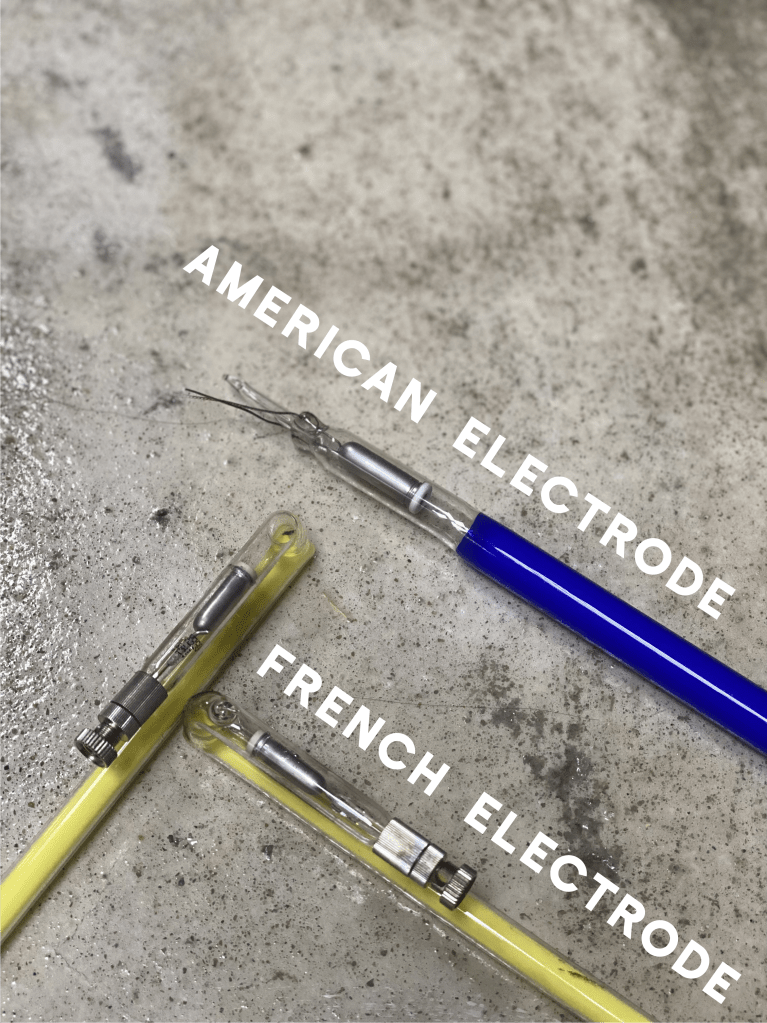
Photo: Chankalun
03 DUTCH BENT
I Can
When I first visited Remy’s studio, I was amazed by the crackle tube with red lighting that he created.
When we do neon bending, we break a lot of glasses. I would like to fill up the tubes with these broken neon glasses from the process.
Normally, a crackle tube would be filled up with glasses completely. However, I would like to experiment with I Can and give it a poetic look where the light would have a lighting and fading effect at the same time.
We can do a lot of things and experiments with neon!

Photo: Chankalun
Remy de Feyter, Alkmaar

Photo: Chankalun
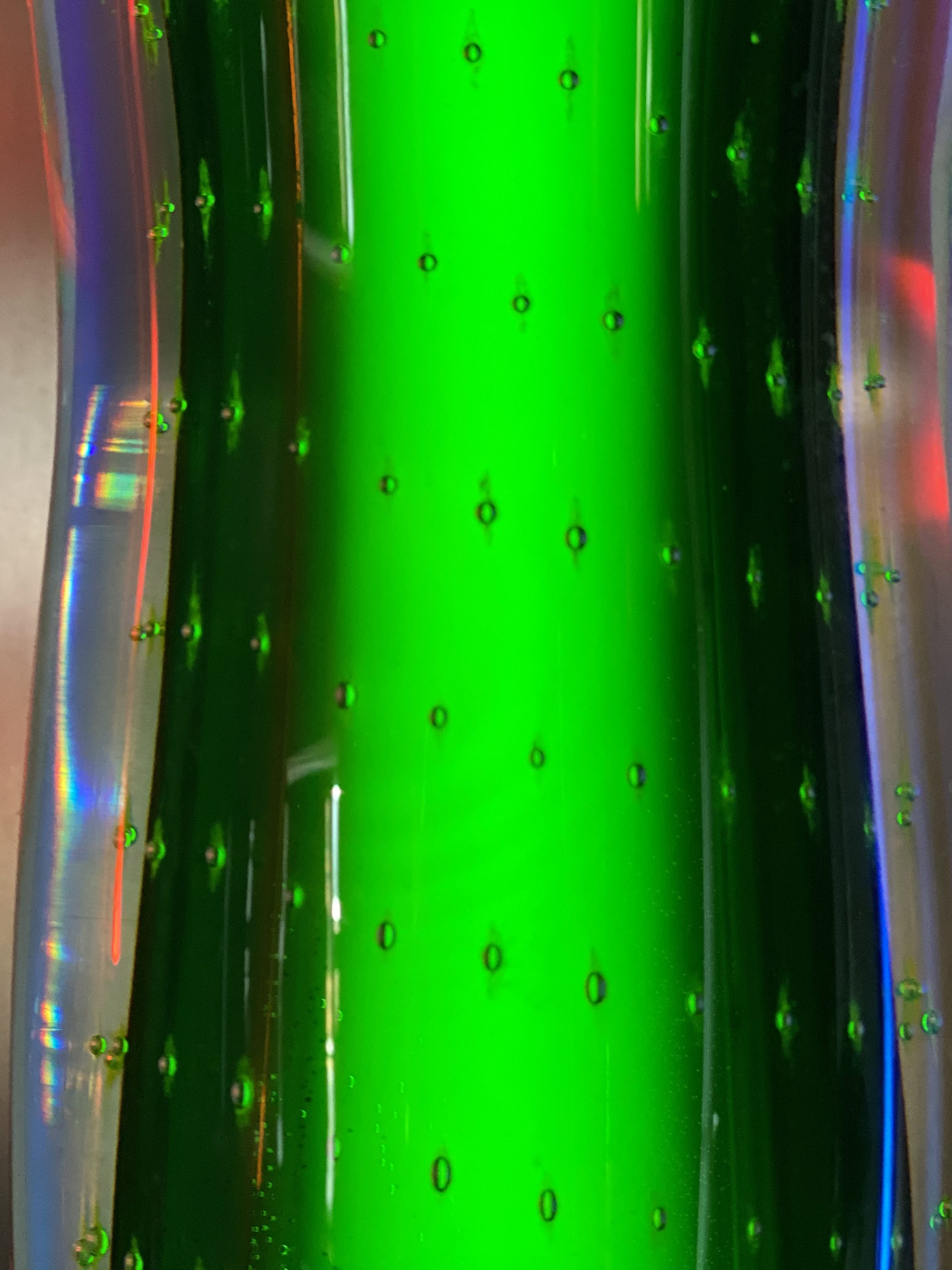
Photo: Chankalun
Remy is the reason why I started “The Neon Girl” project.
When I first contacted him, I showed him the plasma and organic glass work of Studio Swine. I expressed to him my struggle to learn how to create that in Hong Kong. He said: You need an oven to make a work like that! It sets my mind into overdrive. I began wondering how much the availability of basic equipment, like ovens, would impact the evolution of neon design and development in a particular country or region. In the ’50s, for instance, a Western oven wasn’t a typical appliance in a Chinese household in Hong Kong. With this project, I sought to explore if cultural, geographic, or historical factors influence the development of neon in various parts of the world.
Remy’s neon art unlocked my imagination on the possibilities and potentials of neon – how he used the glass blowing technique and plasma to create different striking works… he even turned some old glass vessels/containers into a neon art piece!


The tools that Remy used are also quite different from the ones I saw in Hong Kong and France. Rather than the 5-point heads that I saw in Master Wong’s studio in Hong Kong, he uses double crossfires with knife heads, and a ribbon burner that is equipped on a car wheel!
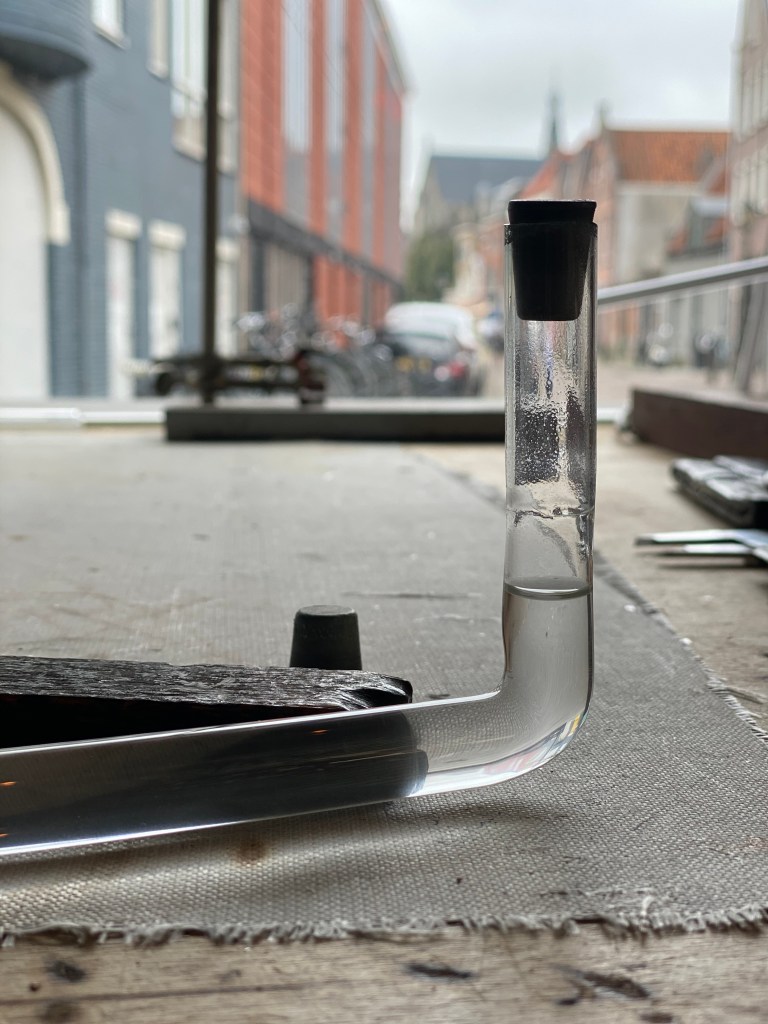
Photo: Chankalun
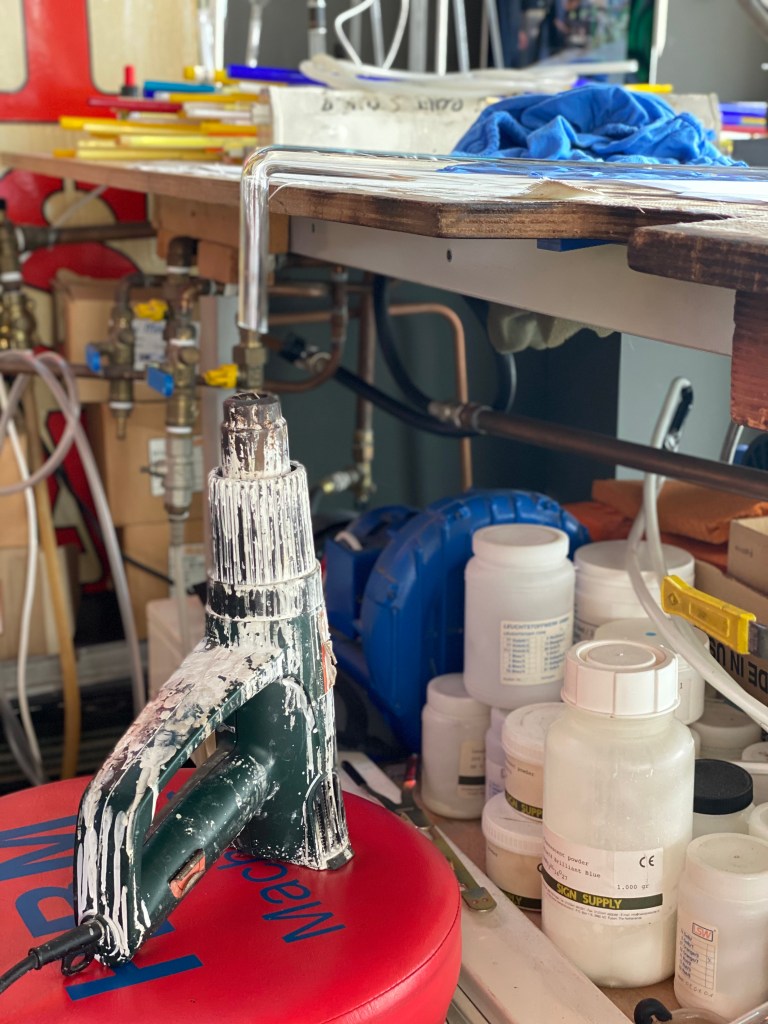
Photo: Chankalun
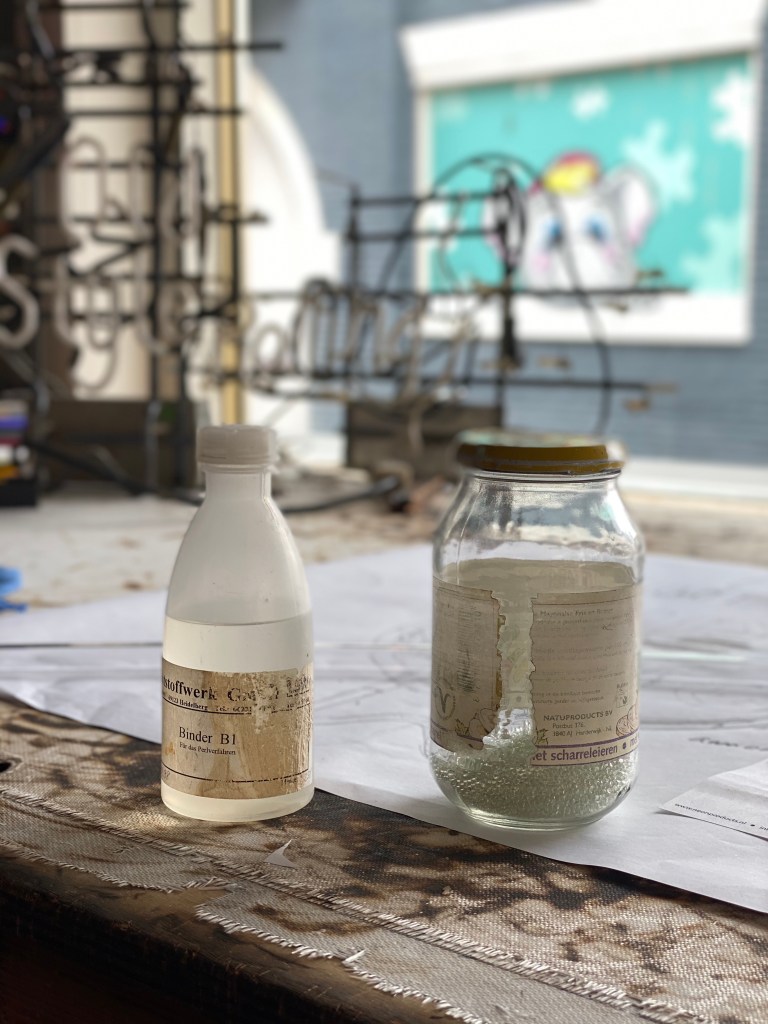
Photo: Chankalun
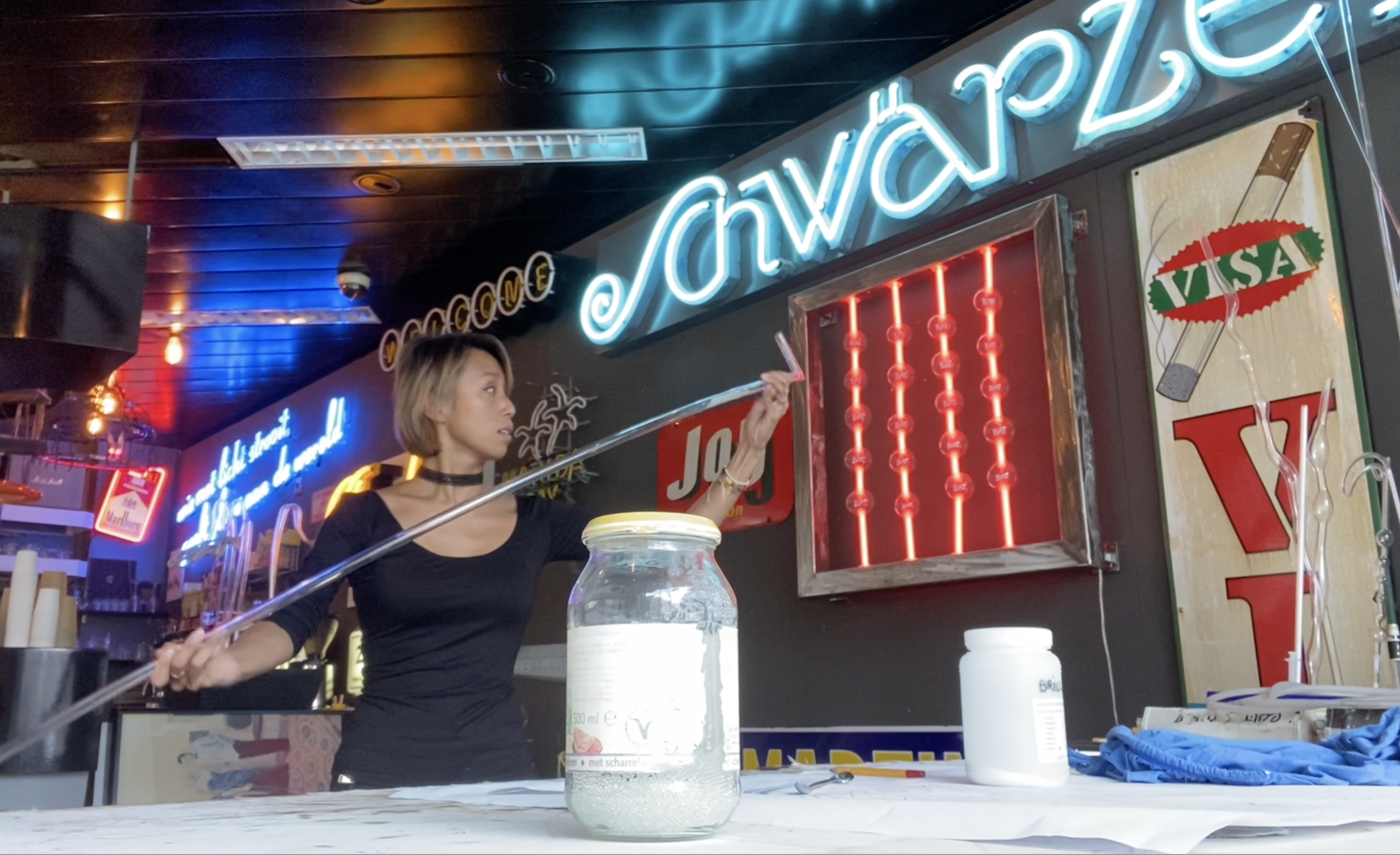
Photo: Chankalun
Remy taught me so much: from repairing old neon signs to bending organic shapes, and even how to apply phosphor powder to neon tubes using the Dutch method, something I had never encountered before!
Traditionally, European neon benders would bend the patterns with clear glass tubes. They would then fill the tube with a thin layer of glue, and then another layer of phosphor powder to give neon tubes colour after they are bombarded. Each neon technician might apply this process differently, depending on their technique.
What are the benefits of it then? Why do Europeans use this methodology?
Imagine if it was a neon tube with a complicated pattern containing lots of tight bends. It would mean a longer and harder process of the glue and phosphor and power to cover each twist and turn. HOWEVER, the welds between one tube to another would be seamless and avoid overheated bents to lose phosphors powder during the process. I observed Remy’s meticulous approach to planning welds, ensuring they remained hidden, even if covered by blockout paint. His attention to detail reflects the excellence often associated with European craftsmanship and their luxury standards.
In the Netherlands, there is a Dutch bent derived from the French/German retoure carré (”Square return”). This method involves a 90-degree angle with a sharp inner bend and a rounded outer bend, which helps prevent mercury and phosphor powder from settling at the edges after prolonged use.
04 JAPANESE BENT
La Lune
When I saw Mayu san’s works, I was stunned by the neon swirl jewellery she made!
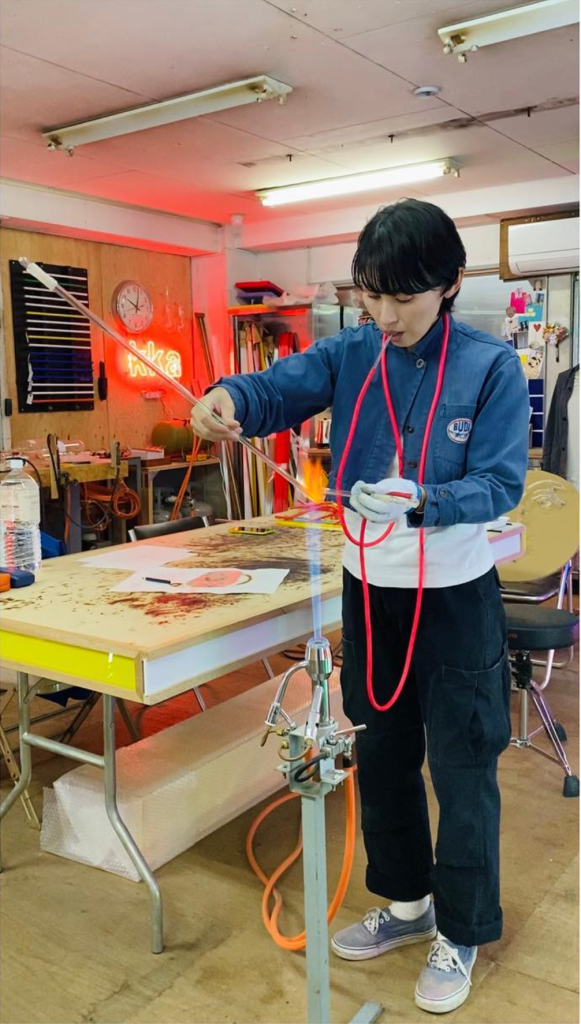
Normally, we use a ribbon burner to make curves in neon. However, Mayu san and her senseis use only a single torch blower to do all the curves! This strikes me and I have decided to learn and apply this special skills from them.
La Lune is a design inspired by the swirl design and technique of Mayu san.
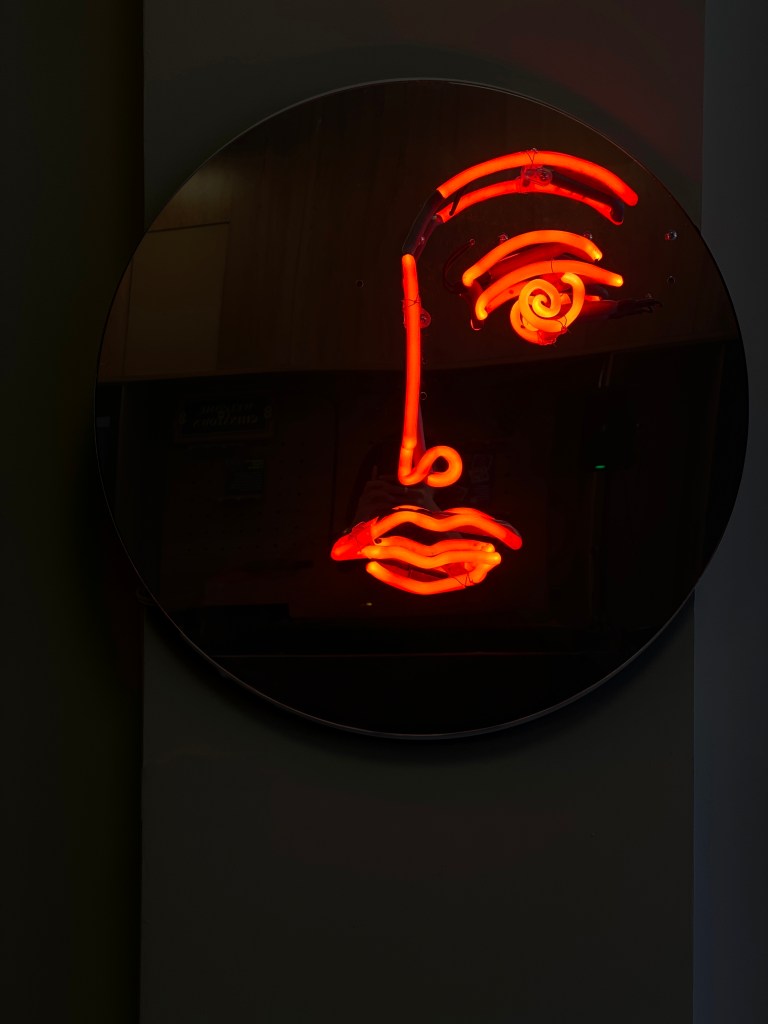
Photo: Chankalun
Itakura Mayuu, Noboru Toishi, Ryuichi Sato, Tokyo

Photo: Mika Watanabe
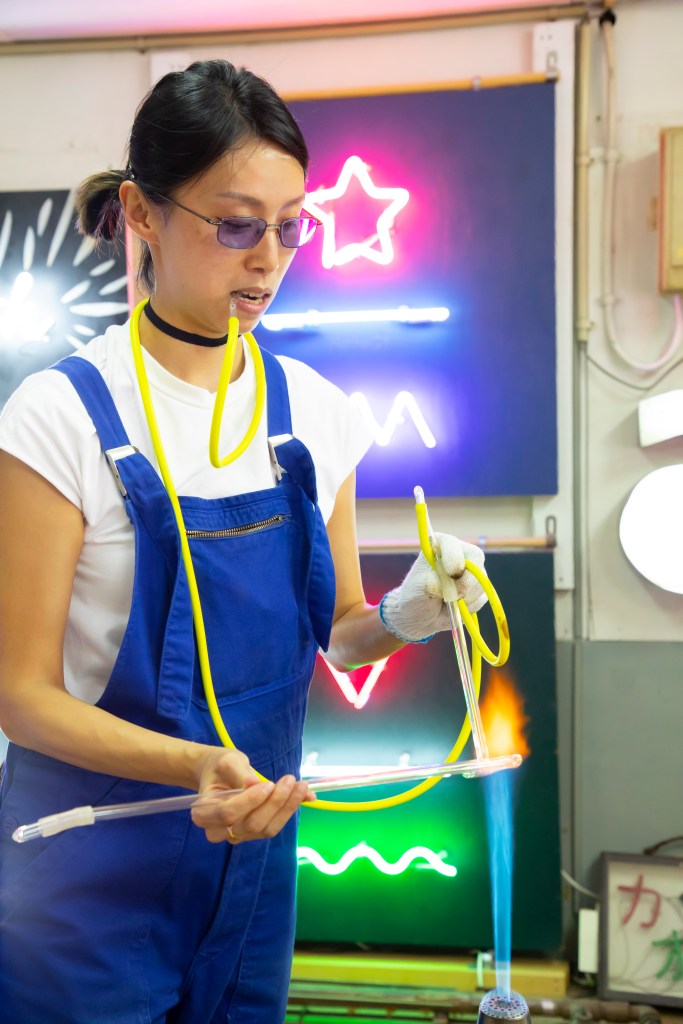
Photo: Mika Watanabe
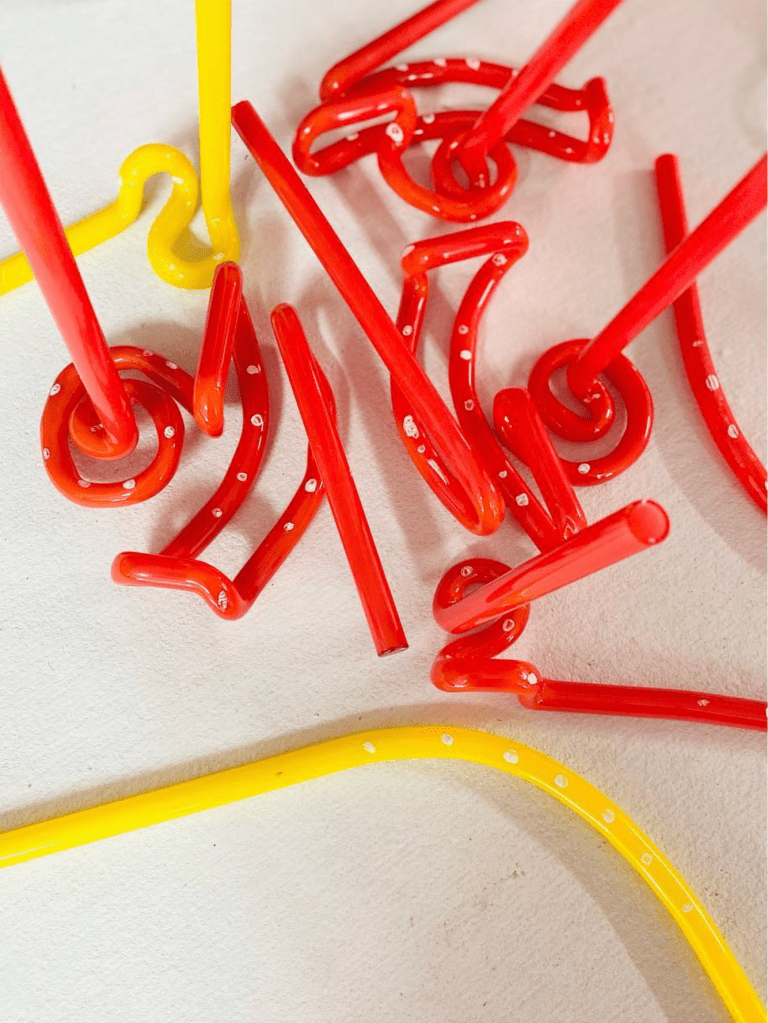
Photo: Chankalun
I was incredibly excited to learn neon-making in Japan after reading Kody Shafer’s Neon Spectacular: Japan. Japan’s dual electric systems—50 Hertz in the East and 60 Hertz in the West—dating back to 1895, have given the country a unique blend of American and European influences in neon art. It’s the only Asian country to embrace both Western and Japanese neon techniques.
Meeting my teacher, Mayuu san, and her mentors, Toishi san and Sato san, reshaped my understanding of neon. In Mayuu san’s Tokyo studio, I noticed the absence of a ribbon burner, a tool I usually rely on for curves. Instead, they carefully bend glass bit by bit using a single torch, a method that amazed me, especially in how Toishi san hand-crafts intricate curves without any markings. This technique inspired me to create my “Yayoi Kusama” neon, where dots (markings) form the bends and curves.
Despite my preconceived notions, Toishi san and Sato san were open-minded and eager to help me learn. They even embraced my unique “Karen style,” making the learning experience both rewarding and collaborative. It was heartening to see how they supported Mayuu san’s journey as one of the few female neon benders in Japan, helping break stereotypes in a male-dominated field.
The Japanese electrodes were another surprise. Unlike American and European ones, which come with a pre-attached tube, the Japanese system requires creating a small hole to inject the gas. This process reflects Japan’s self-sufficiency and the secrecy that surrounds the neon industry.
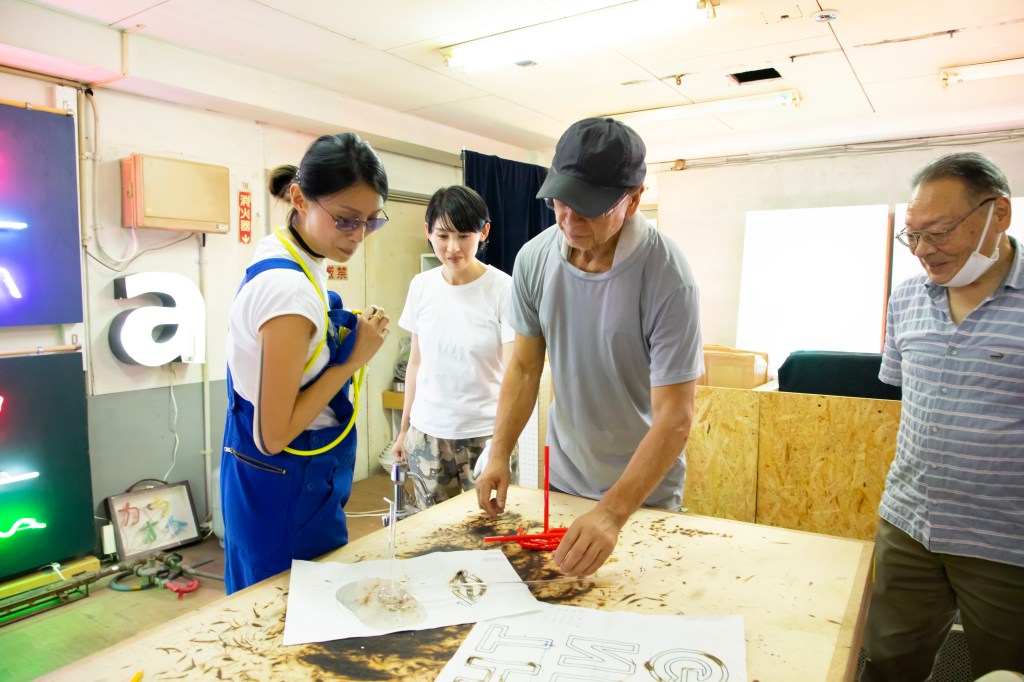
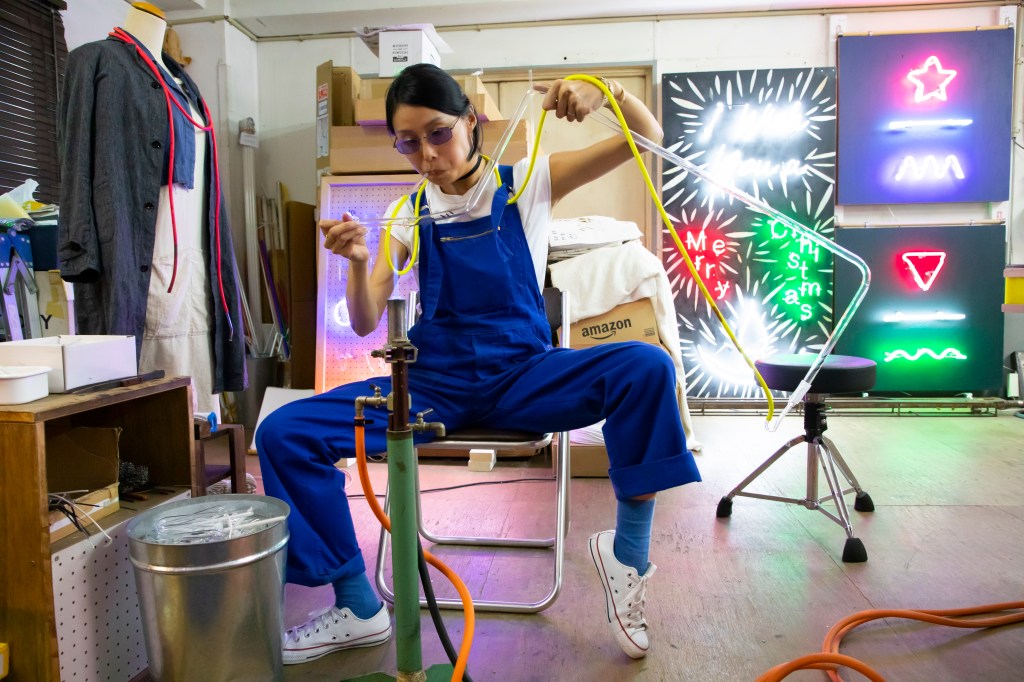
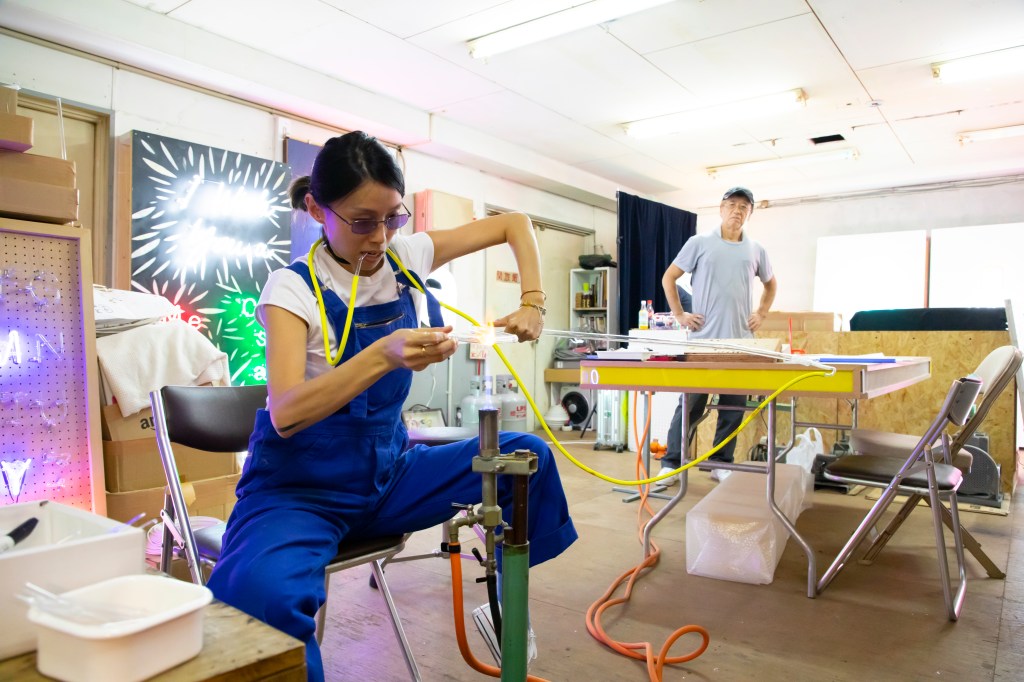

Photo: Mika Watanabe
Learning from Mayuu san, a female neon bender, was unforgettable. She juggles her neon art with her full-time job at a TV broadcasting company in Tokyo and travels long distances to keep pursuing her passion. Her resilience was inspiring, and her poetic view on neon deeply resonated with me: “Kokoro to Kurashi ni Akari wo tomosu,” meaning “Neon lights up people’s hearts and the lives of those who create it.”
Despite language barriers, we bonded through neon, speaking a universal language that transcended cultures. Mayuu san became like a sister to me, and I’ll never forget our emotional farewell when my residency ended. For me, neon is not just about the art and science, but also the connections and compassion I found along the way.
05 AMERICAN BENT
Every Body Is A Beach Body
A study version of Every Body Is A Beach Body, inspired by James Akers’ “Xenon Tangle”.
With a collective of international women’s bodies images collected amongst my friends, I wish to feature their bodyscapes and express the idea of “Every body is a beach body” through an organic heart shape achieved from glass blowing and neon bending.
The work celebrates all kinds of female bodies despite their shape and skin colour. The heart shape also illustrates self-love and the courage from those women who submitted their images on a different level of self-confidence in their bodies.
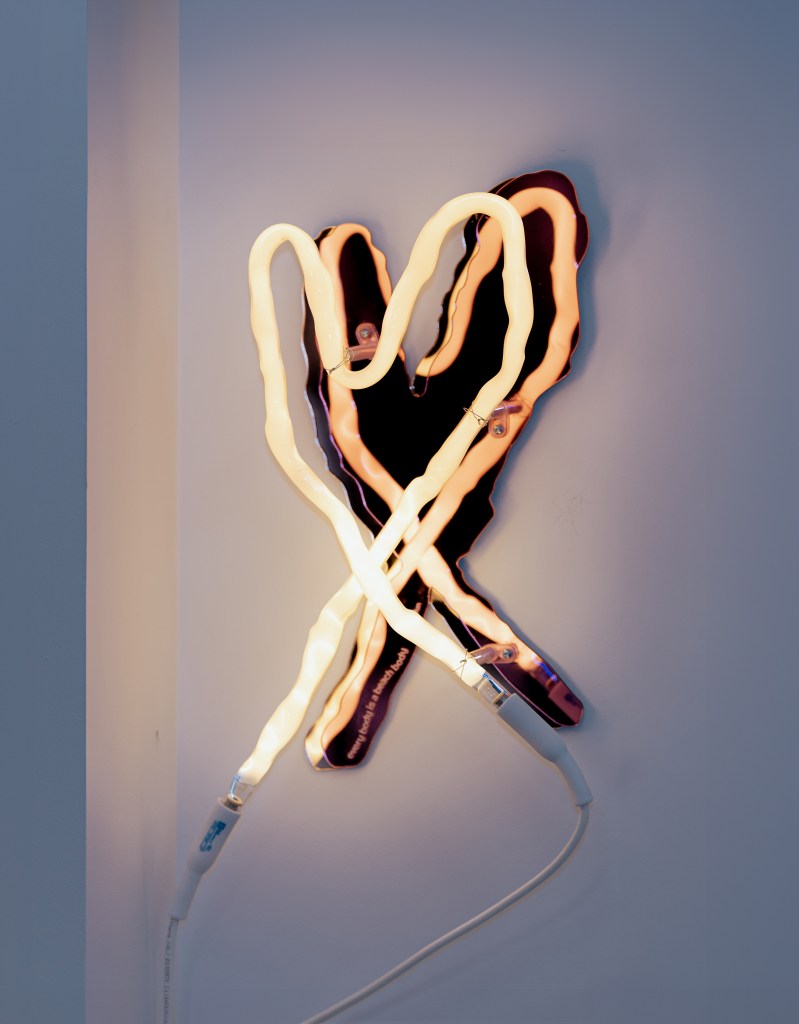
Photo: Kevin Yan
James Akers, New York
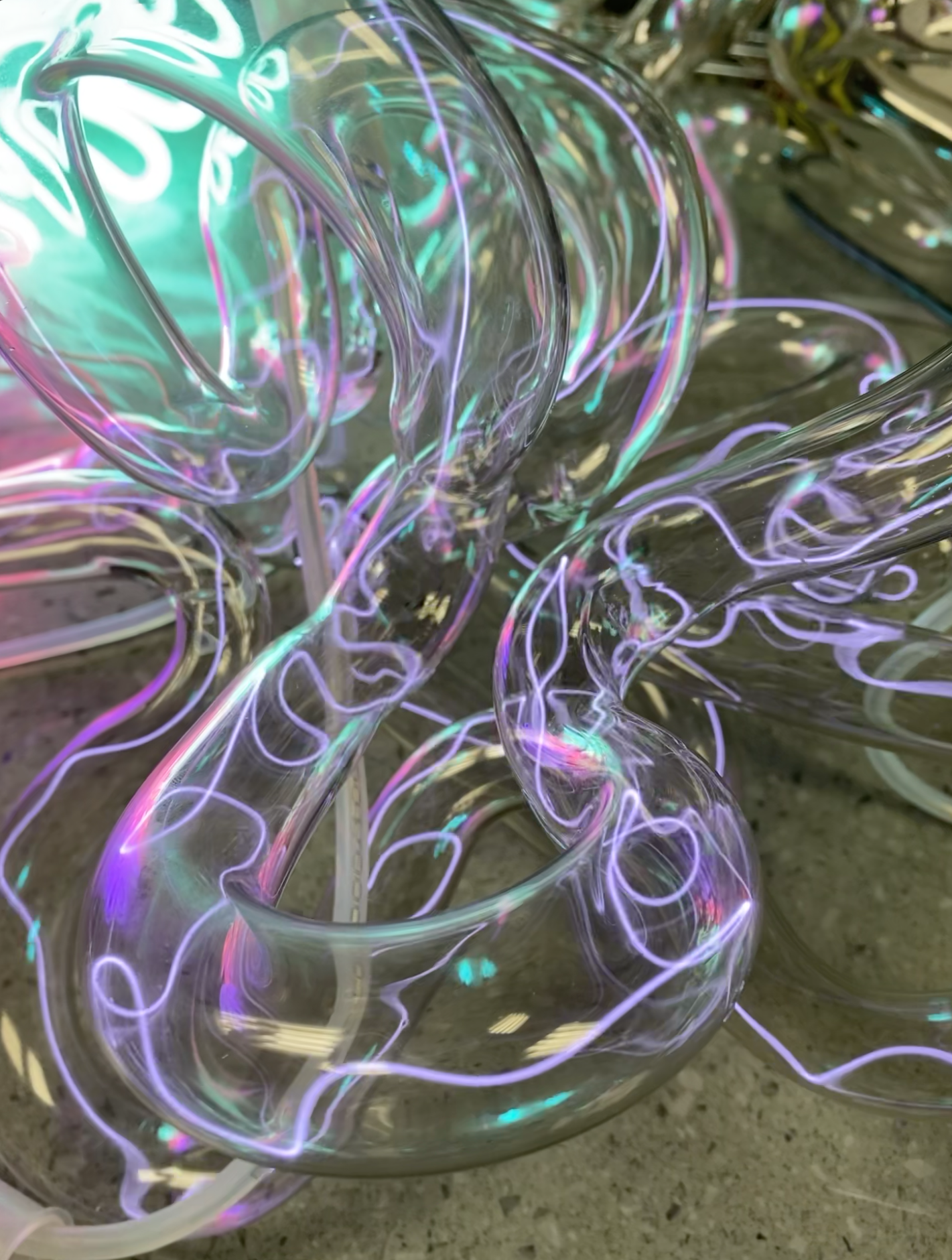
Photo: Chankalun
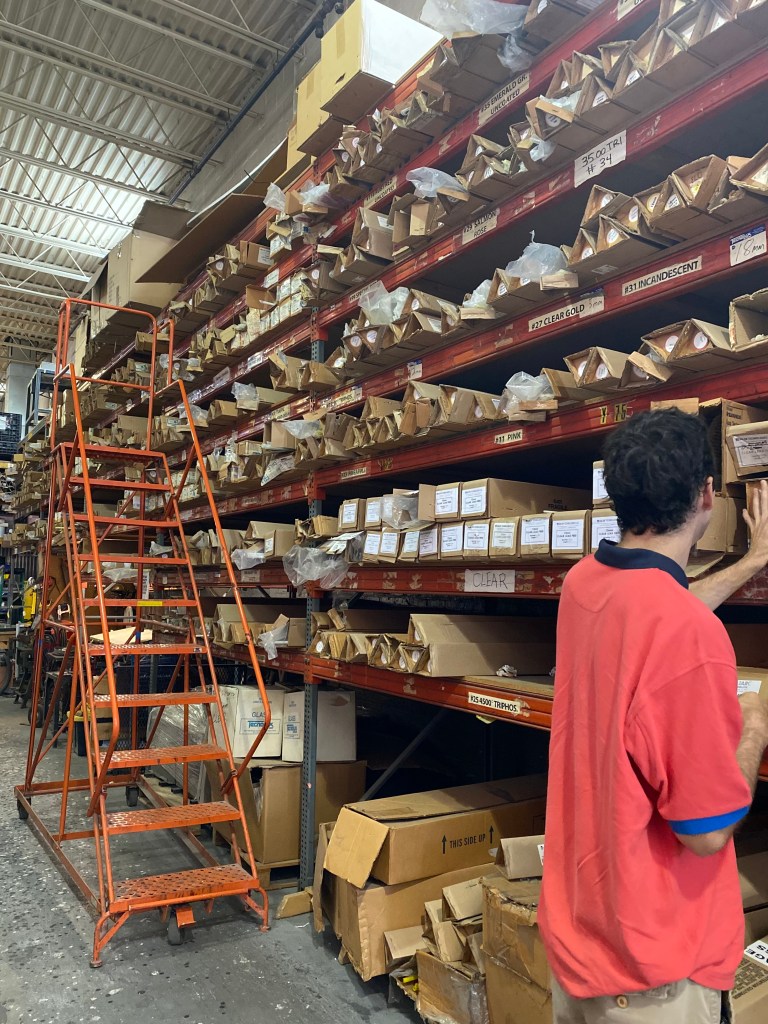
Photo: Chankalun
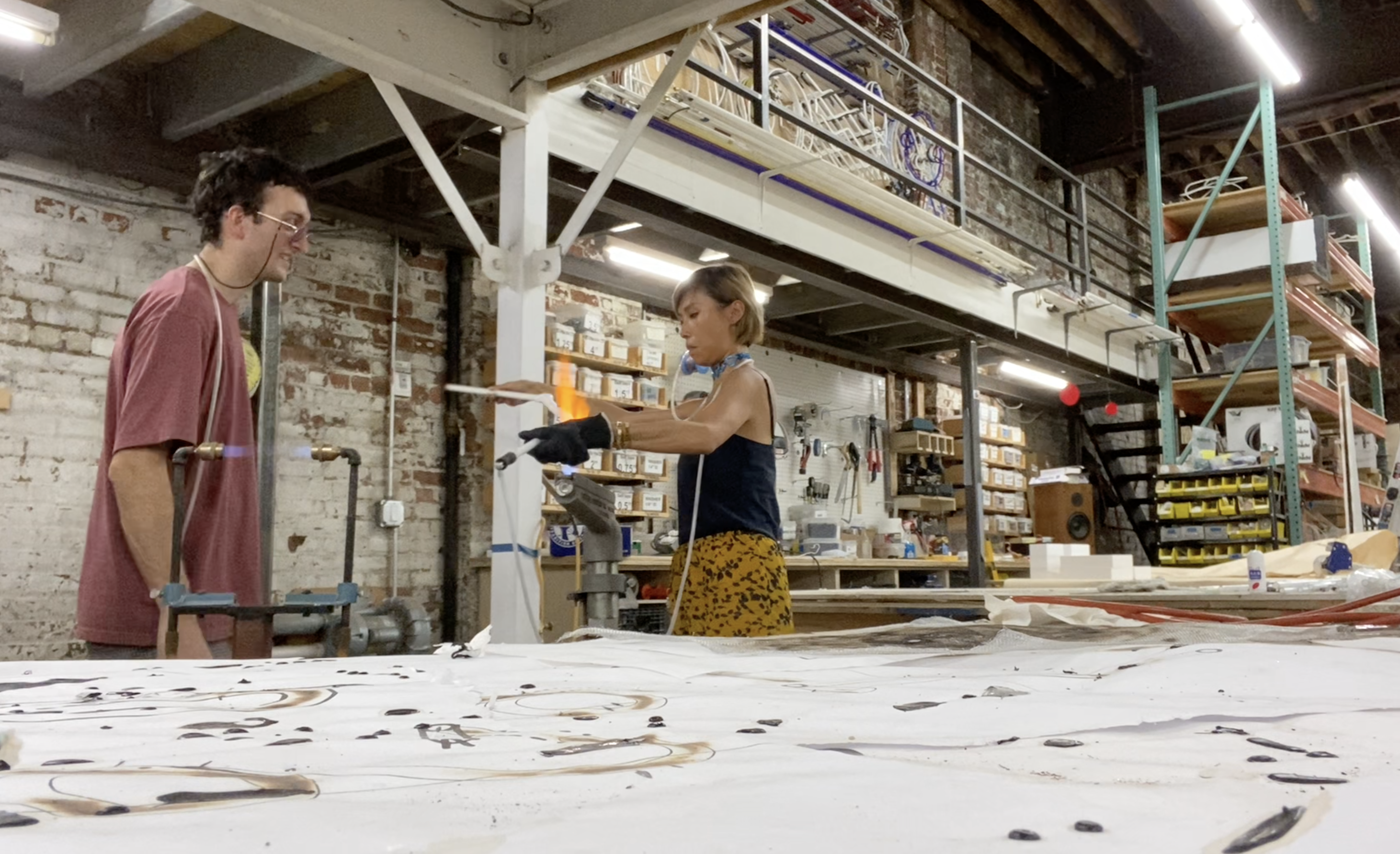
I have been a fan of James Akers’ Xenon art. Seeing his “Xeon Tangle” collection in person excited me.I remember one of the things that surprise me was that he uses foam for packaging neon too! Before we start our class, he took me to Brooklyn Glass where full range of neon tubes were displayed like I was shopping in IKEA. This is by far the biggest physical neon tube shop I have seen, as most of the time I purchase them online, or directly from the limited stock at different neon studios in Hong Kong.
James’s neon studio is located in a sign shop in Brooklyn, where he produces neon for them in return for a space for his own creation. James learnt neon making when he was in university and has been creating neon for more than 10 years. American art universities have been considering neon-making as a discipline where they have been brewing more and more young neon benders and artists. With the promotion of glass and neon art through Brooklyn Glass, Urban Glass and the Museum of Neon Art, accessibility to neon in the US is by far the highest I have seen in the world.
I was learning how to make Every Body Is A Beach Body from James. We started with printing my pattern with a hacked ink blotter printing with a pen – that was the first time I saw how a pattern could be drawn this way!
The making of Every Body Is A Beach Body was a new experience for me. The work repurposed the glass-blowing technique we use normally in neon making to mimic the body silhouette of my 13 female friends to promote self-love and body positivity.
I have asked James for a particular pink where the phosphorus power would make the neon tube easier to break from over/re-heating, or overblowing. James has shown me both techniques in blowing bigger bubbles and reducing glass diameter.
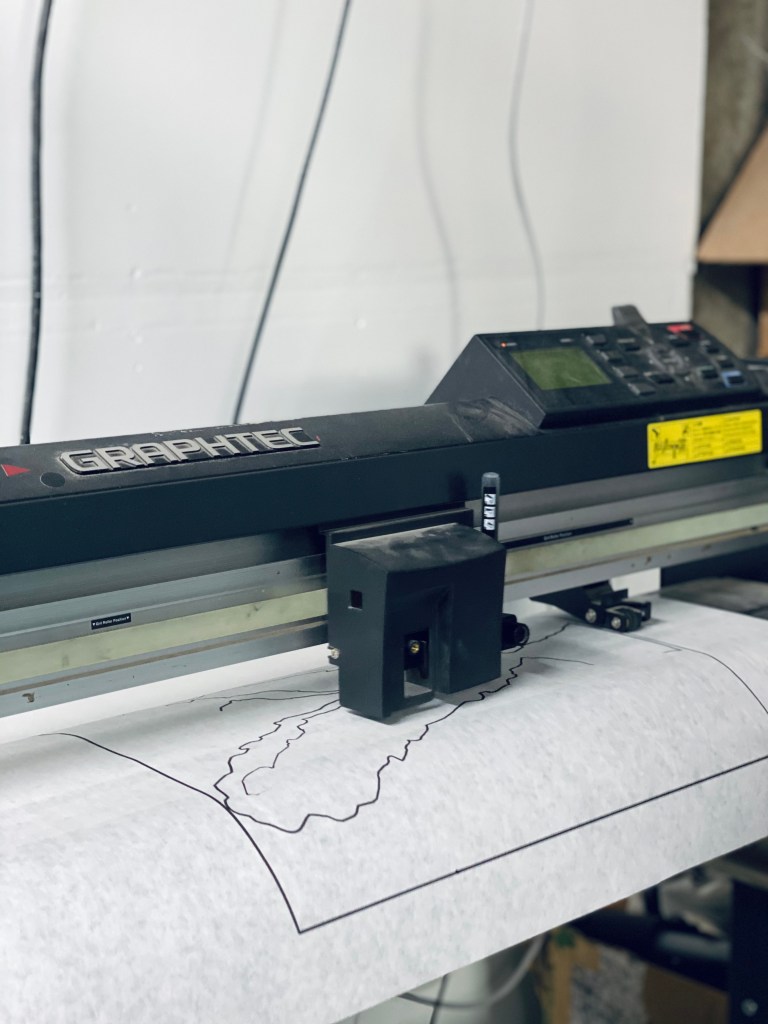
Photo: Chankalun

Photo: Chankalun

James is a giant to me, his cross-fire burner was also taller. I would then need to raise my arms even higher to bend the neon. It was also the first time I saw a didymium glasses for protection at James’ studio, I often thought it was part of his look when I watched his video and turned out it’s a specific protective glass for glass makers.
And the most special part about this neon is that it uses Xenon gas. With the right mixture researched by James, and technical help from Stephanie at Urban Glass, it created a wobbly lighting effect! The process was scary because we knew the piece was very prone to breakage and we didn’t know if there was gas leak in some of the welding. Aaand at the end it works!
Fun fact: when I install this neon in HK, the lighting effect is different when I use the same transformer as I did with James – it looks more like a lightning. Can you guess why?
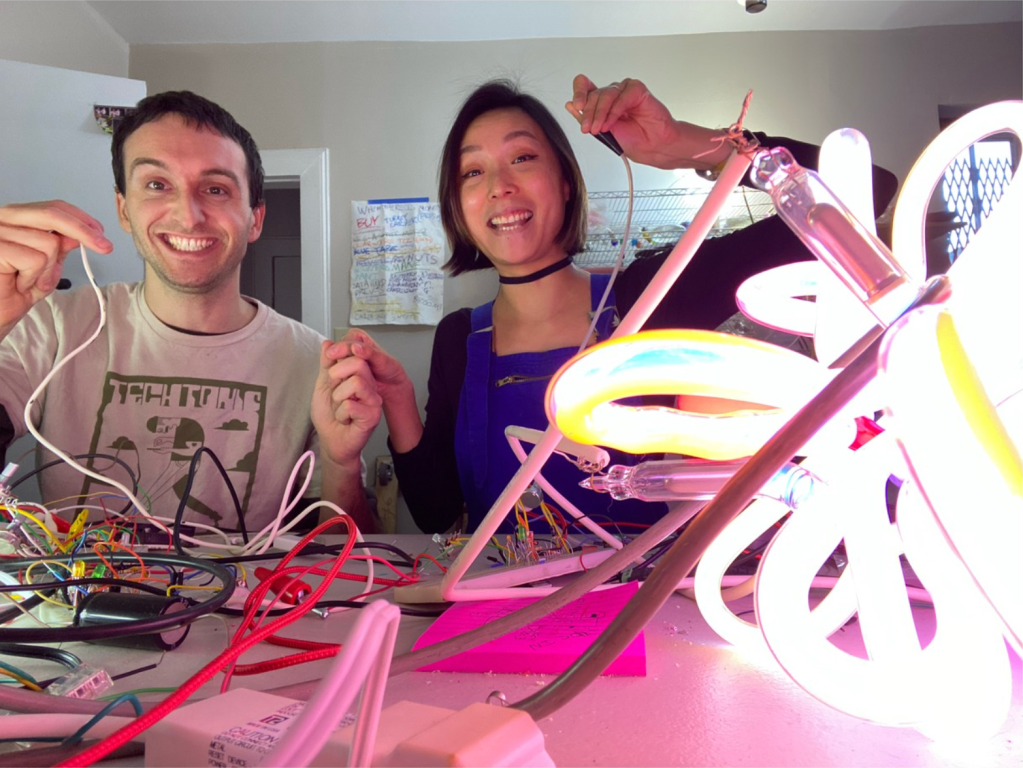
Since my first encounter with James, I have learnt that he’s been self-teaching himself to hack devices to make neon interact with them. I was excited to learn this from James as I could see myself doing more interactive neon and hoping not to fry anyone’s brain.
The interactive neon classes were held at his flat-studio, where it is a little maker space at his apartment filled with electronic components, geras and neon!
I had experience with Arduino and Adafruit in my Master’s degree before, and James has taught me how to use different types of CMOS chips – the week-long classes definitely made me feel like I’m reliving my Master’s doing Physical Computing.
I have learnt how to sequence the blinking of one or more sets of neon based on the audio input, and also different ways to adjust the brightness of neon based on Human Circuit (this was initially the approach for the interactivity of Light as Air) and other inputs – the future of neon is limitless!
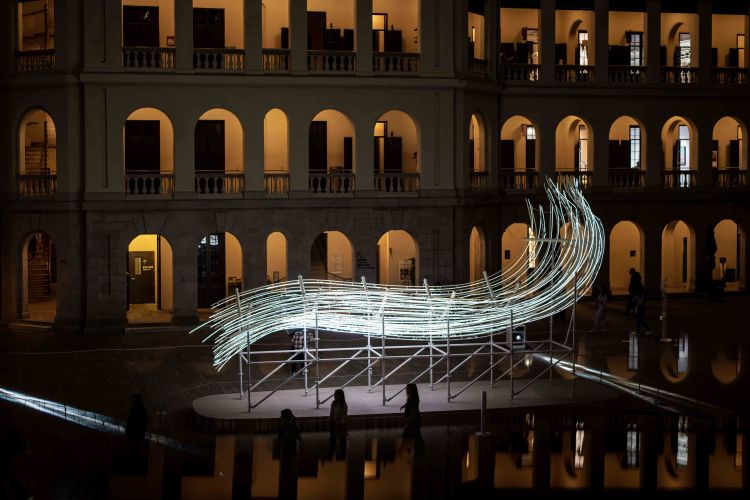
Commissioned by La Prairie for Art Basel Hong Kong 2023
10000mmW x 5000mmH x 3000mmD
Photo: Kit Cheng
06 TAIWANESE BENT
Mother Nature
Master Huang shun-lo’s neon arts are inspired by his surroundings in the deep mountain at Hsinchu in Taiwan.
Mother Nature is a tribute to his works and my love for the Earth and our Mother Nature.
Not only is a rare neon sculpture, it is also made in single electrodes with a transformer that can be powered by DC batteries!
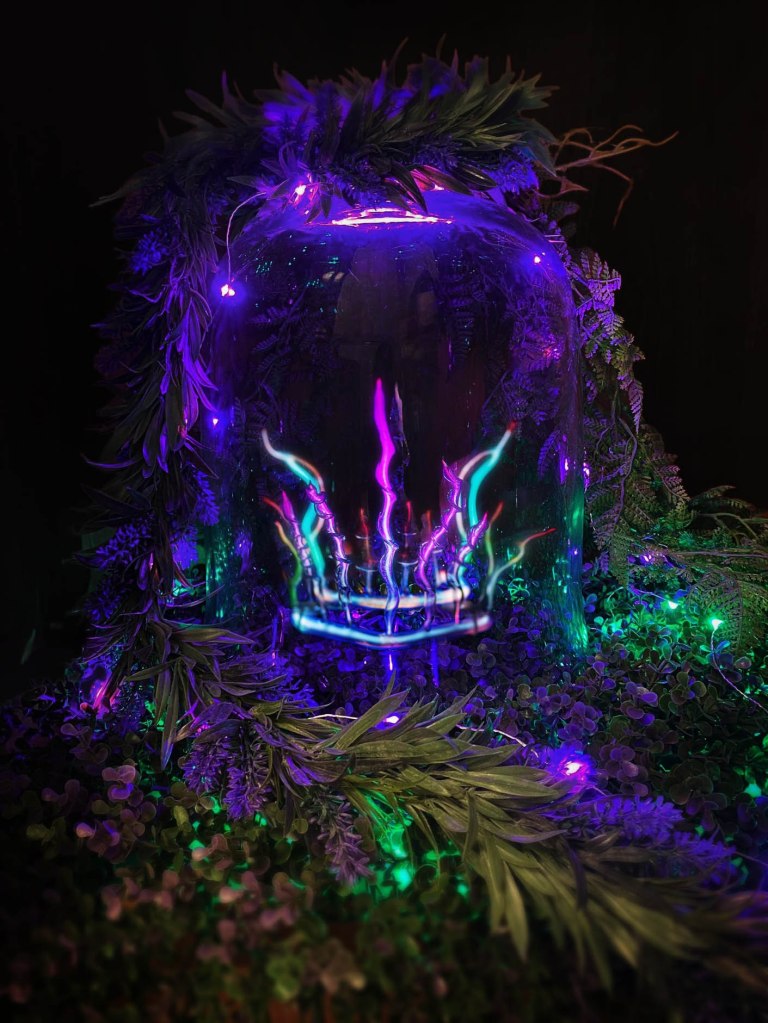
Photo: Chankalun
Master Huang shun-lo, Hsinchu
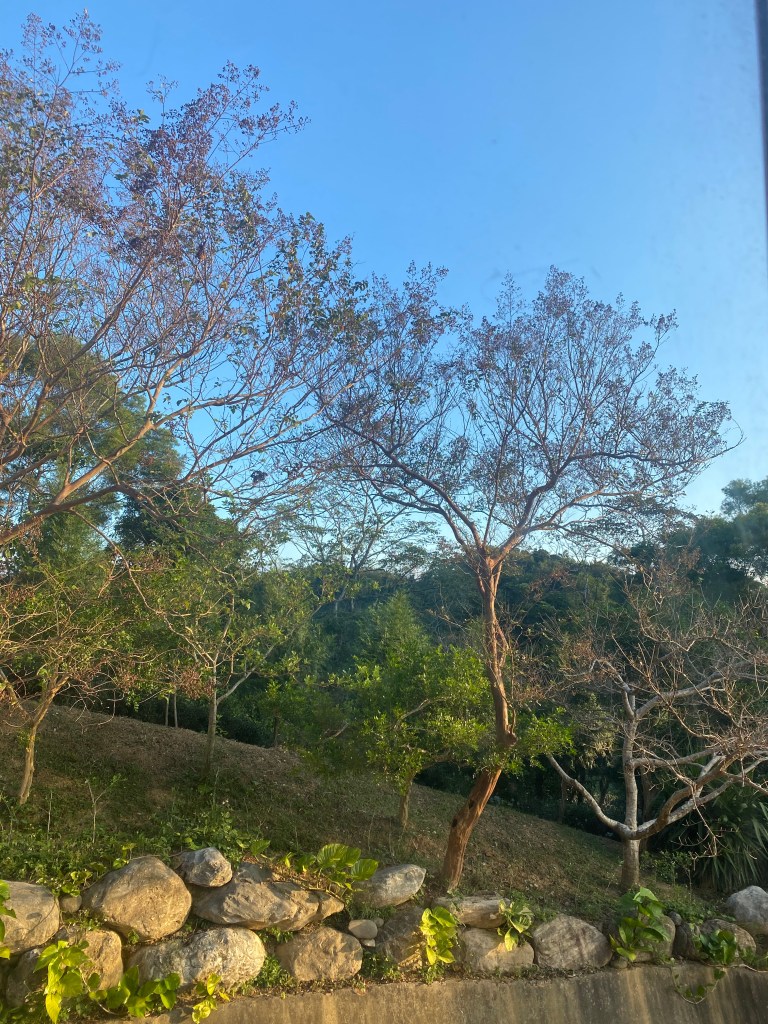
Photo: Chankalun

Photo: Chankalun
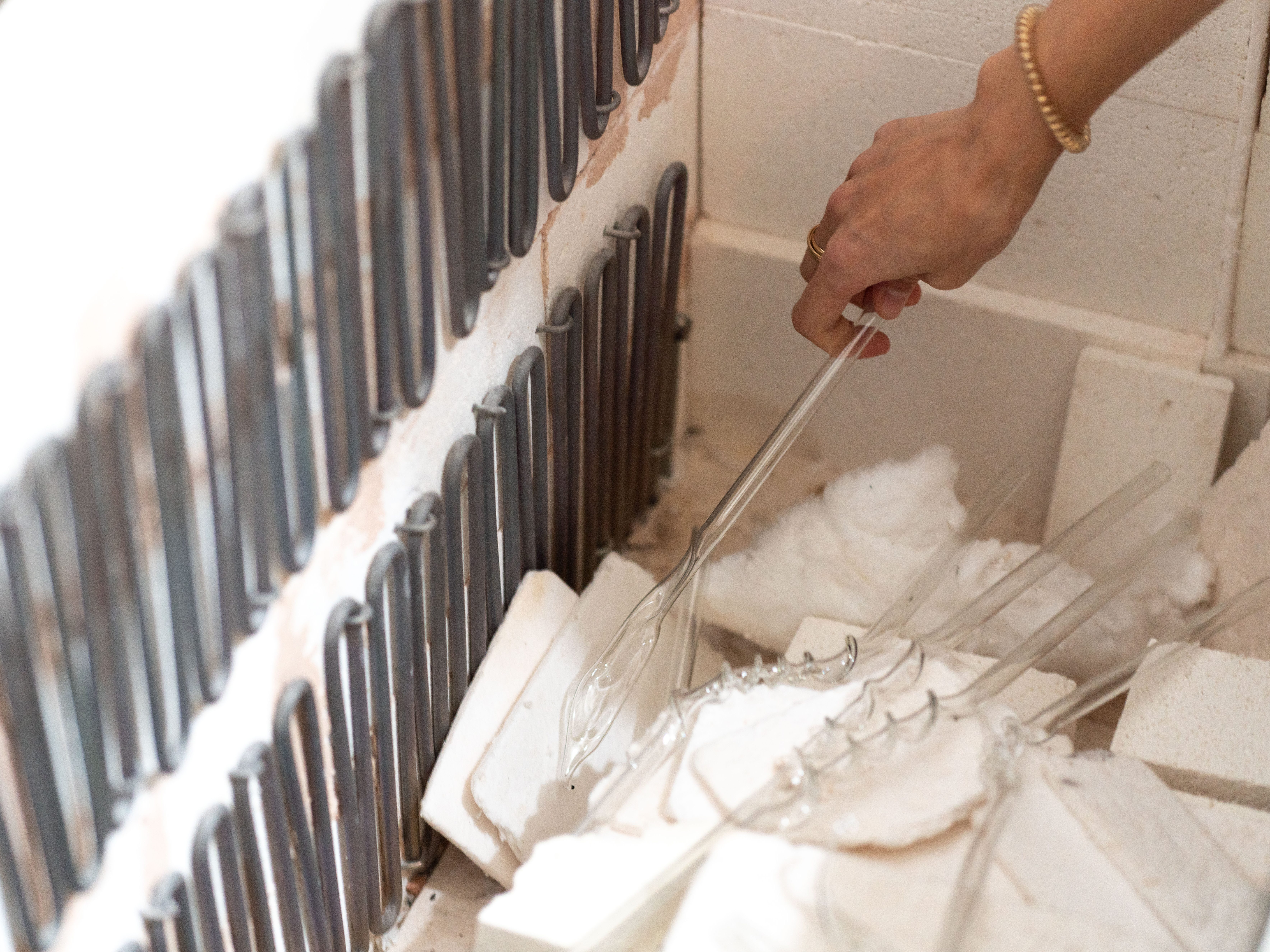
Photo: Tim Chong

Photo: Chankalun
Master Huang’s neon studio is not situated in a metropolitan city like many other neon benders I met, but in the deep mountain in Baoshan, Hsinchu of Taiwan.
He took me on a 30-minute drive the day he picked me up: from the Hsinchu high-speed train station, we passed through the famous Hsinchu Science Park, stretching onto the muddy mountain road with the lines of orange trees, and finally arriving at Master Huang’s studio-house.
I started to understand where Master Huang’s nature-inspired works come from – he is surrounded by his muse every day.
I was stunned the moment I saw all his neon works I had been looking at online coming alive in front of my eyes…
He’s not only a neon bender, a neon artist… to me, he’s also a scientist and inventor.
What I admire the most is his passion for a perfect neon installation, which motivates and drives him to investigate and invent different techniques and products, like a tailor-made bombarding machine slash annealer for his glass sculptured neon and a made-to-order device to make his single electrode works with a better visual enclosure, transformers that power neon with rechargeable battery or power bank for his passion projects, etc.

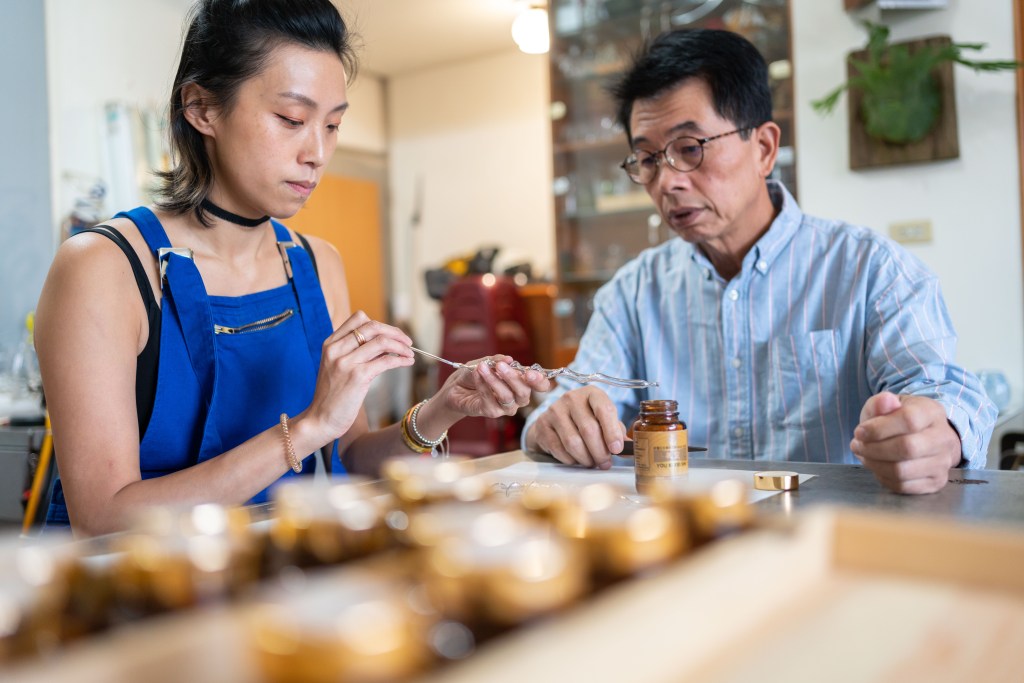

From my first 2-weeks residency with Master Huang in Taiwan, he has taught me glass sculpting technique, which is quite different from the neon bending experience I have had so far. I am curious and impressed at the same time that we can incorporate both glass sculpting and neon-making techniques into one work. It was the first time I wasn’t only blowing air into the tube, and also breathing in! You can see both ways of exhaling and inhaling air in the leaves I made.
Master Huang has also invented a lot of tools to assist him in glass sculpting, especially this stand made with a combination of clamp and camera tripod! I have learnt from him that, it is not necessarily to bend or sculpt glass in a hard way to prove your skills, sometimes having tools to assist you appropriately is as important too!
Unfortunately, there are not many studios I know of that could allow me to reuse these techniques that I learnt at Master Huang’s, due to the limitation of equipment and tools (as he personalised his to make it happen) to prevent stress in the glass and hence breaking them. Well, I guess that has made my experience with him more precious.
Back in the day, Master Huang exported neon signs from Taiwan to the US. He would invent different smart and efficient ways to produce works with repetitive patterns. During my short residency, he understood it might be difficult for me to master and bend a perfect half circle as the base of my crown within a short period, and proposed that I use a clay mould to assist me. He has taught me the importance of being flexible in one’s approach.
There are several ways to “create” colours in neon light, from my previous experiences, you can see a traditional technique that runs layers of phosphorus powder with glue with Rémy in the Netherlands or buy pre-coated and baked neon tubes with phosphorus powder commonly seen around the world.
What I experienced with Master Huang Shun-lo in Taiwan was to humidify the neon tubes and blow phosphorus powder in with a tiny tube. This technique is used because we were glass sculpting the neon tubes, and I would like to achieve a fading effect that’s subtle with layers. If we use pre-coated neon tubes, we will definitely lose some of the phosphorus powder on the way unevenly. With this technique, we can even direct where we want the spray the powder, in an organic way like how nature is.
On a normal day, Master Huang’s neon studio would be humid enough to “glue” the phosphorus powder in with a direct blow to the tubes. However, while I was there, the weather was drier. We have tried different methods, including attaching a tube from a humidifier to let the mist of air run into the tubes… and we finally settled with humidifying the tube by spitting and spraying a small amount of our saliva in.
Exhibition design: CeeKayEllo (CKL)
Exhibition production: Welcome to Chinatown
Exhibition neon installation: James Akers, Chankalun
Tremendous thanks to Sven Travis, David Ablon from Brooklyn Glass, Karen Ng from Carnaby Fair, Eva from Canal Plastic and Labor!
“The Neon Girl” project is funded by Design Trust Hong Kong and CeeKayEllo (CKL).
Also exhibited at…
01 HONG KONG ARTS CENTRE
Collect Hong Kong 2025
Mar 23 – Apr 4, 2025
Hong Kong Arts Centre