01 CONCEPT
Terre
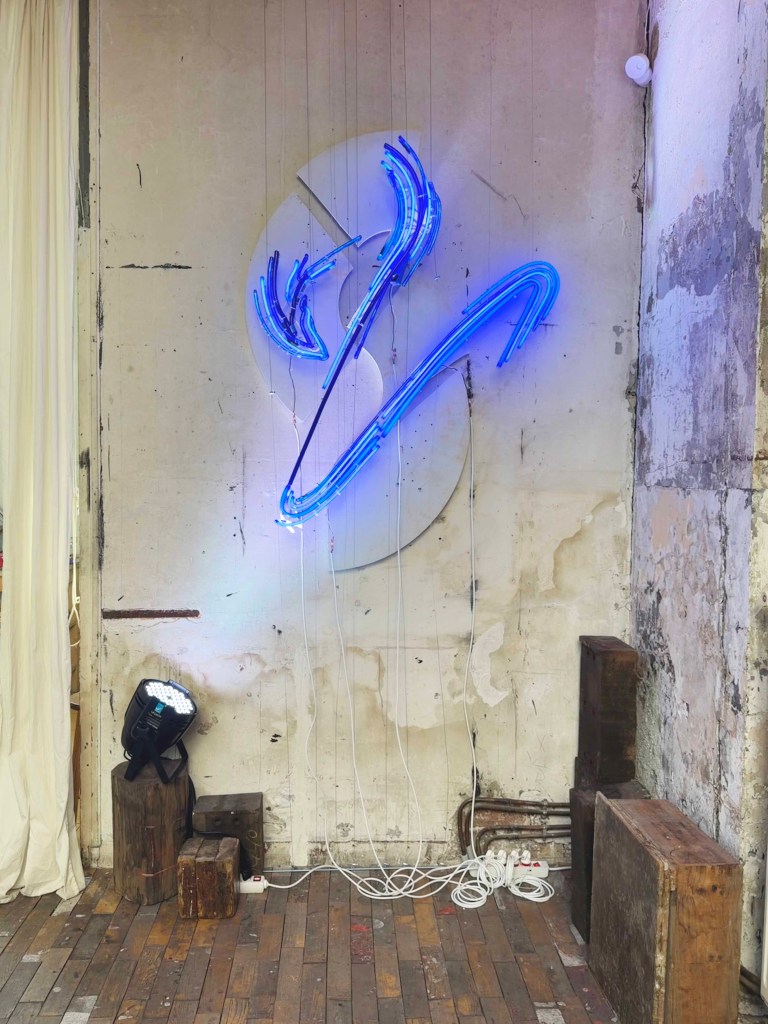
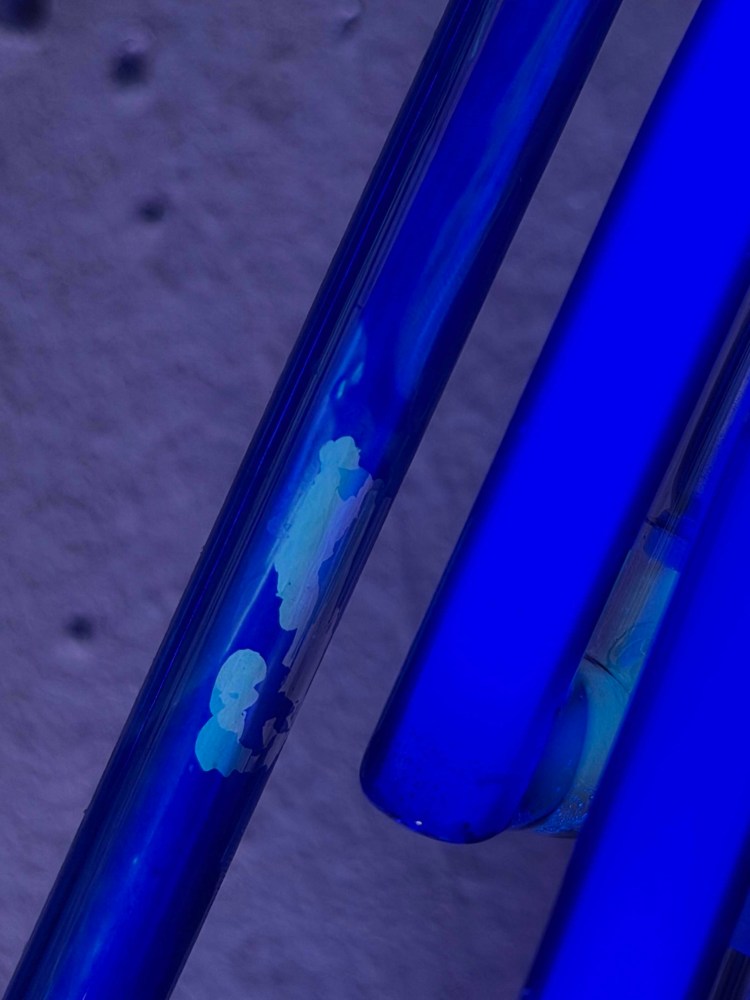
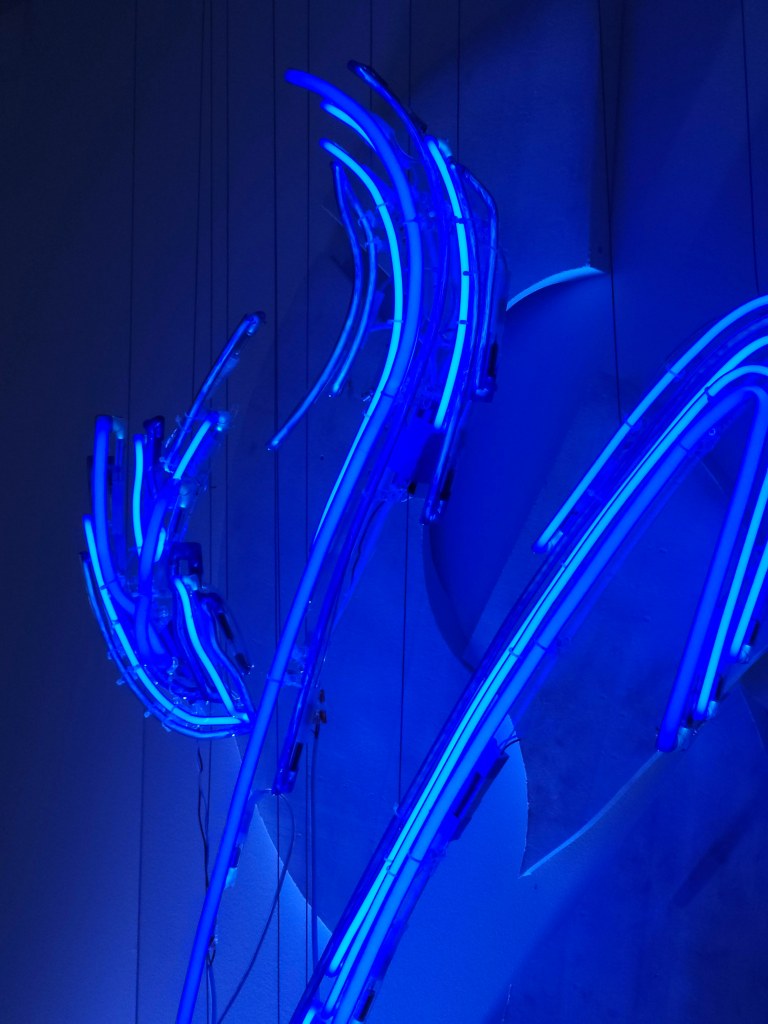
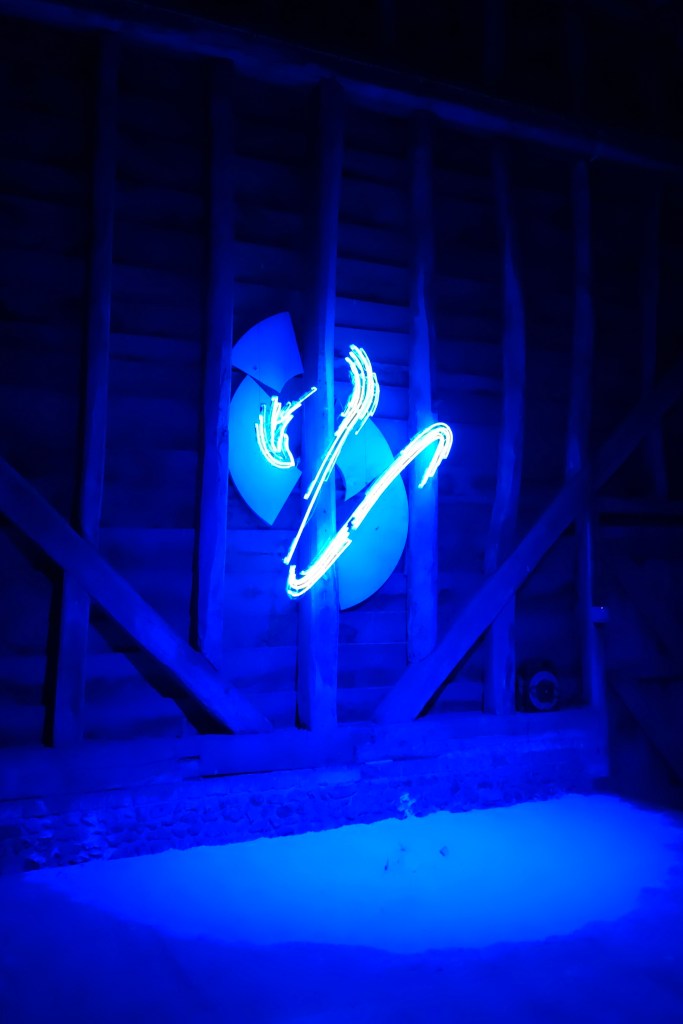
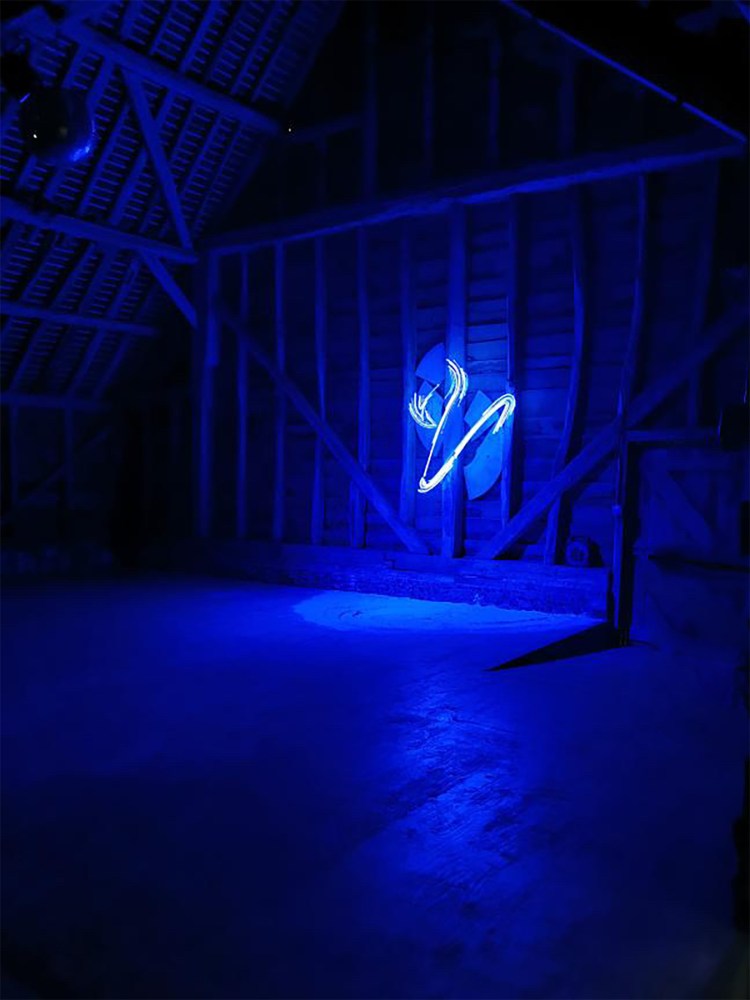
Terre is a time-based neon installation conceived in dialogue with place, history, and slow transformation rather than spectacle.
First presented at Braziers Park, a heritage site in Oxford, the work has since been installed in Brussels and is lately shown at Atelier 11, Cité Falguière, a 150-year-old heritage artist residency in Paris. Drawing inspiration from the Chinese “grass” radical (艹), Terre reinterprets it as a symbol of grounding, growth, renewal, and the invisible forces shaping the world beneath our feet.
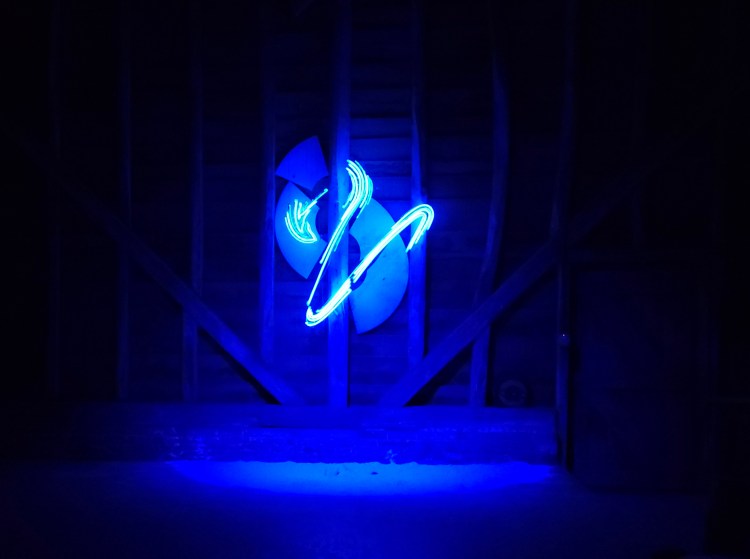
Installed at the historical heritage barn at Braziers Park in Oxford for the “SOIL Wilder Community Exhibition” curated by Caroline Vitzhum, Terre is a neon art installation that explores the invisible force of the earth’s ground and translates ecological memory into sculptural form.
« Terre » est une installation en néon à caractère temporel, conçue en dialogue avec le lieu, l’histoire et la transformation lente plutôt qu’avec le spectaculaire.
Présentée pour la première fois à Braziers Park, site patrimonial d’Oxford, l’œuvre a ensuite été installée à Bruxelles et est actuellement montrée à l’Atelier 11, Cité Falguière, une résidence d’artistes patrimoniale de 150 ans à Paris. S’inspirant du radical chinois de l’« herbe » (艹), « Terre » le réinterprète comme un symbole d’ancrage, de croissance, de renouveau et des forces invisibles qui façonnent le monde sous nos pieds.
02 NEUROSCIENCE OF LANGUAGE LEARNING
Trace
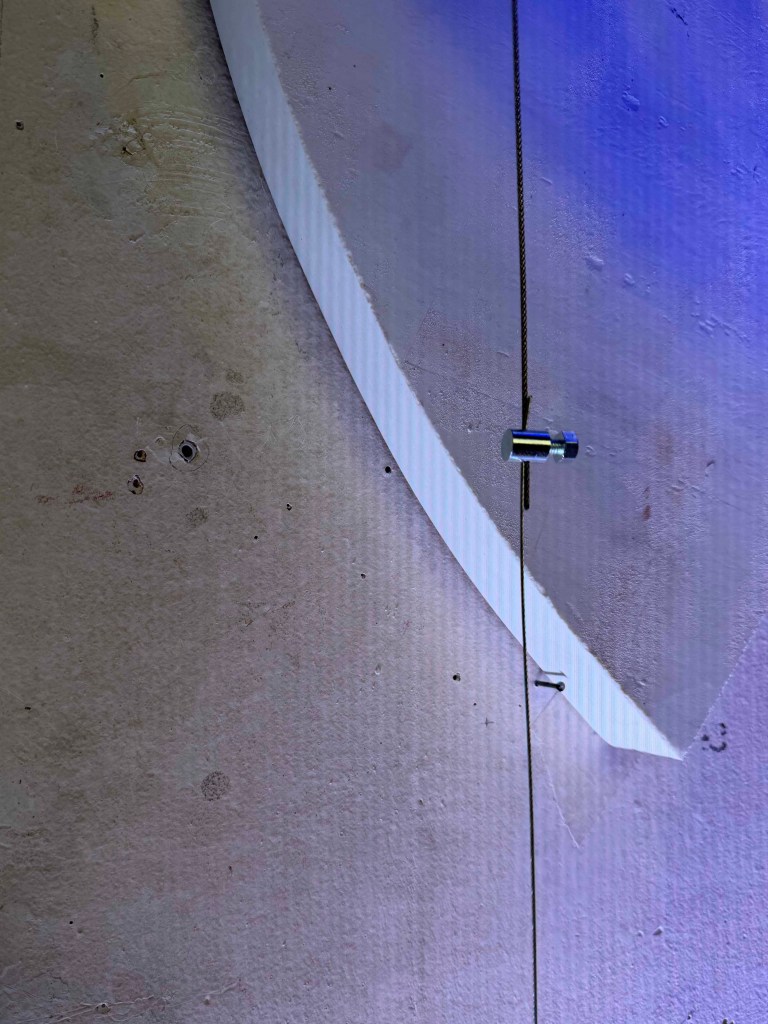
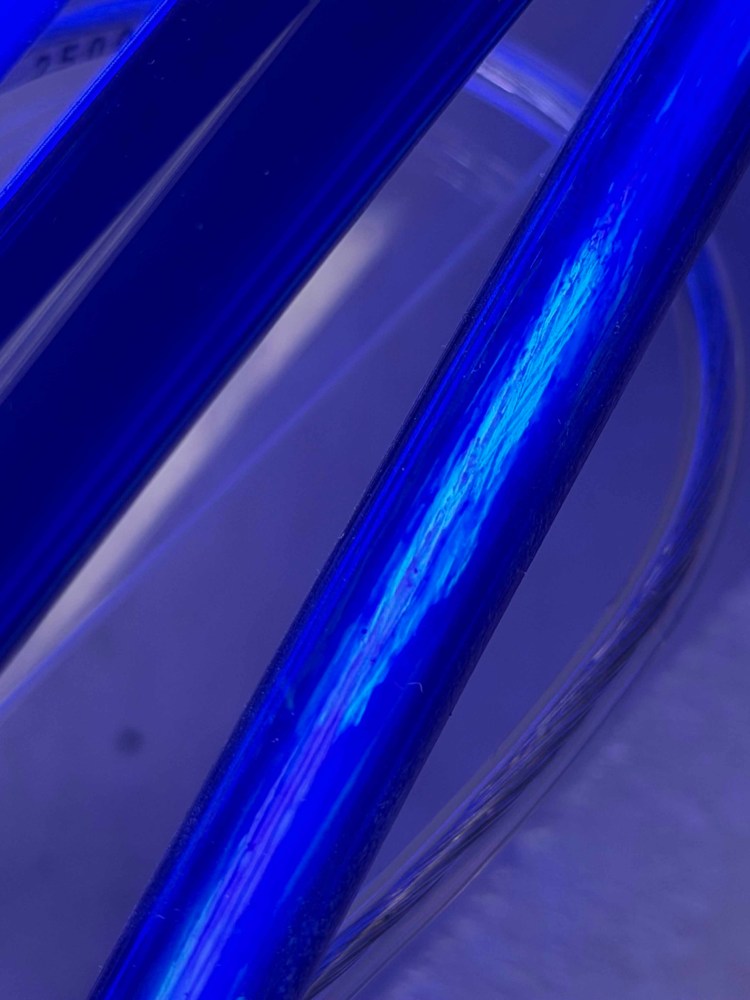
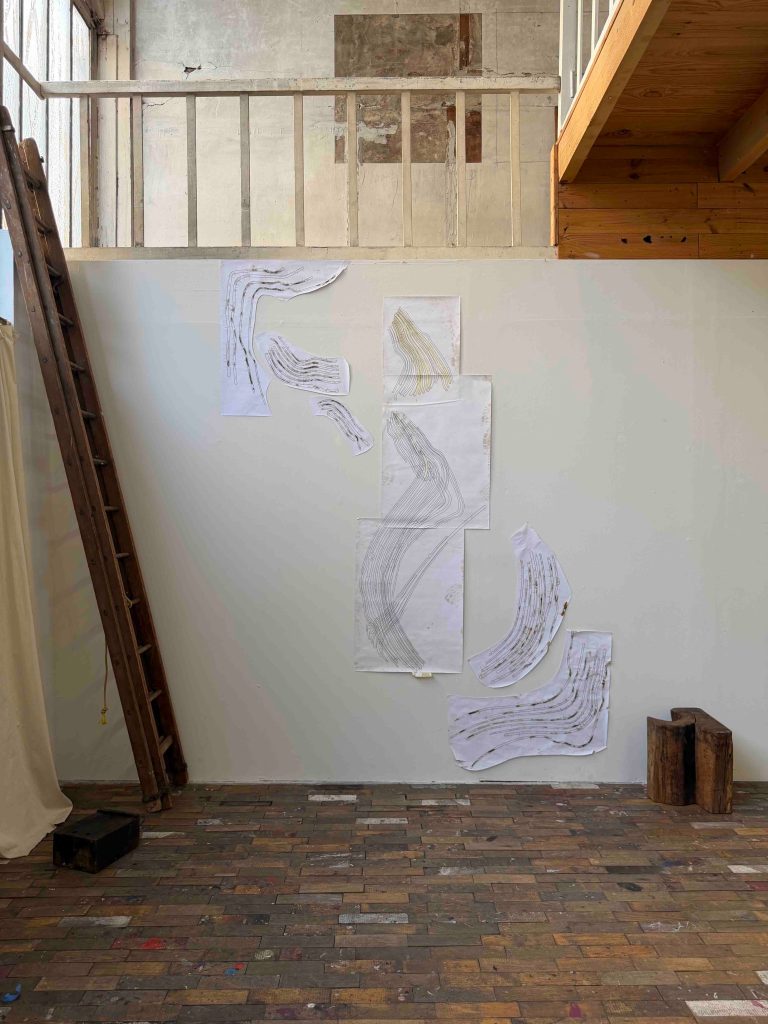
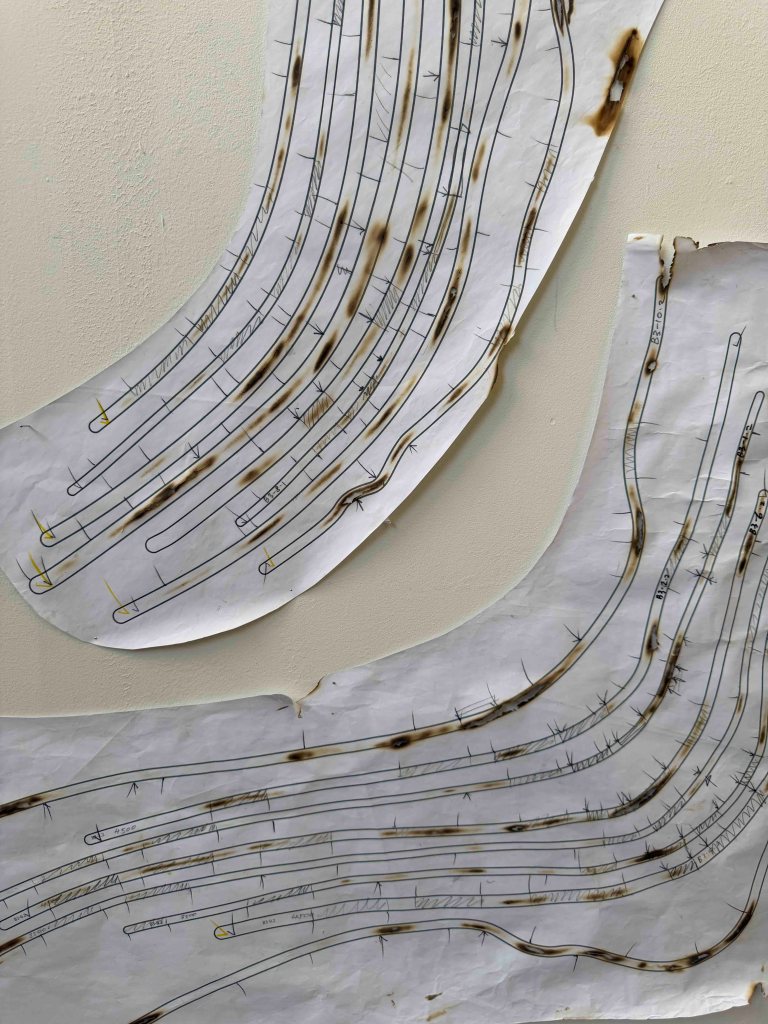
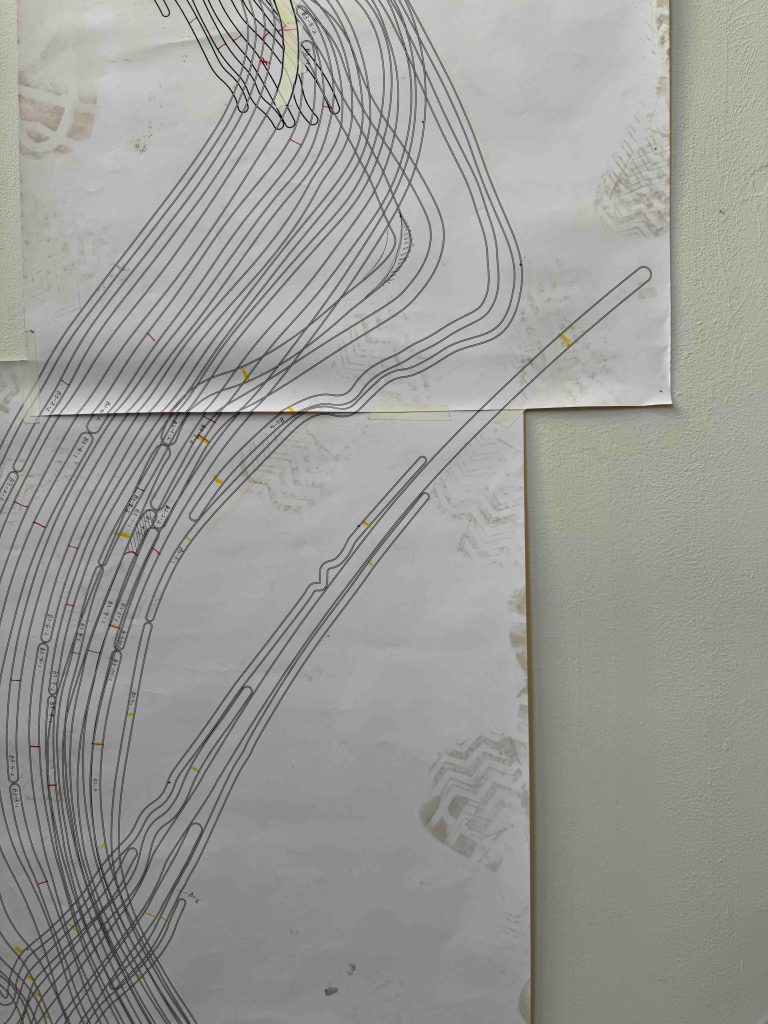
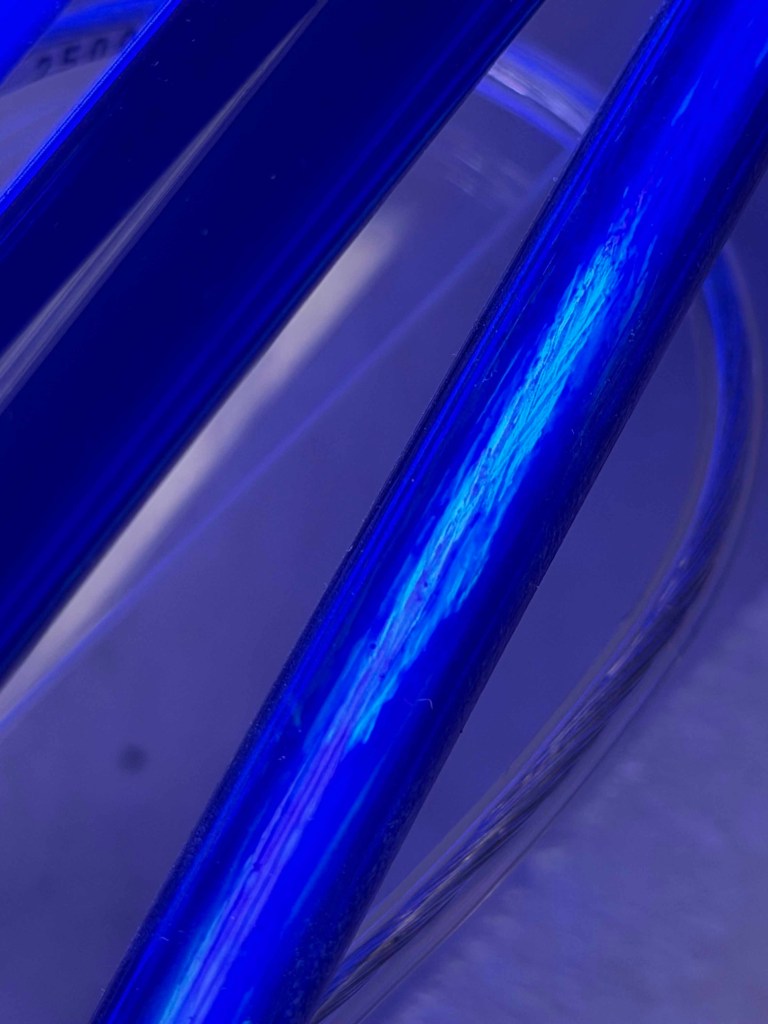
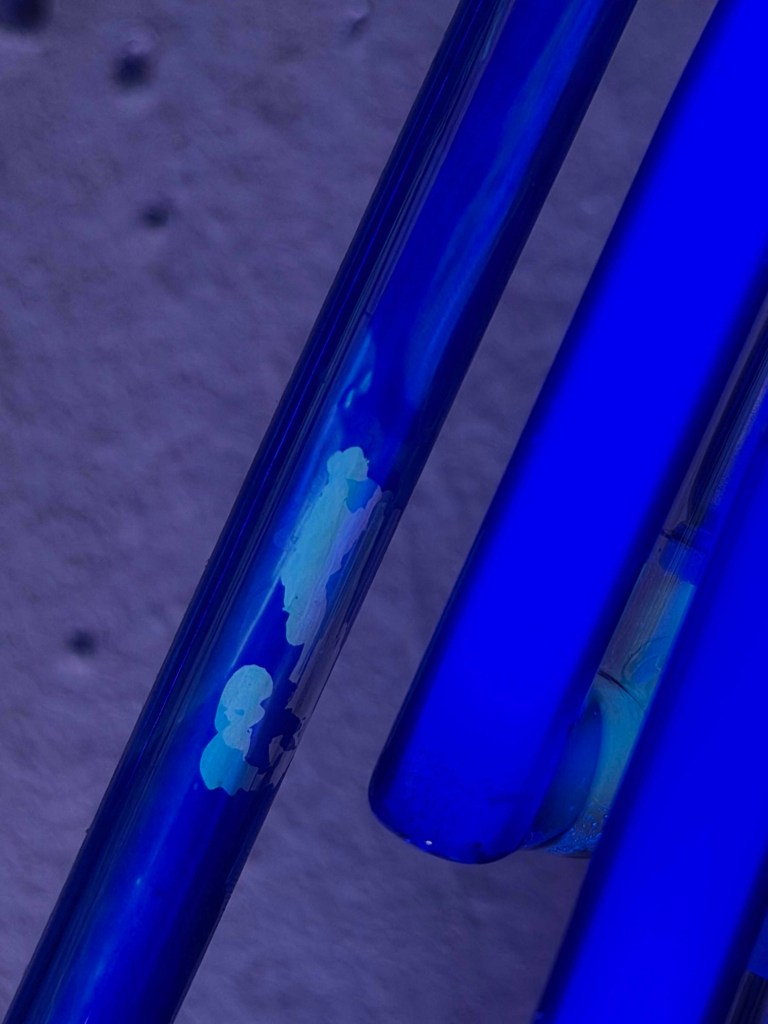
Each installation records its own making: heat marks embedded in pattern paper, glass shaped by fire, fingerprints in paint, transport scars and adaptations, and accumulated revisions. Like language and the brain, the work does not return to a fixed state—it adapts. Over successive installations, Terre survives through revision rather than perfection, carrying old and new forms simultaneously. In this way, the work reflects how invisible forces—geological, linguistic, and human—continue to shape both landscape and thought.
Chaque installation enregistre sa propre fabrication : marques de chaleur inscrites dans le papier de patron, verre modelé par le feu, empreintes de doigts dans la peinture, stigmates et adaptations liés au transport, ainsi que révisions accumulées. À l’image du langage et du cerveau, l’œuvre ne revient pas à un état fixe : elle s’adapte. Au fil des installations successives, « Terre » survit par la révision plutôt que par la perfection, portant simultanément des formes anciennes et nouvelles. Elle reflète ainsi la manière dont des forces invisibles — géologiques, linguistiques et humaines — continuent de façonner à la fois le paysage et la pensée
03 THEME
Earth
For most of the materials I use—glass, porcelain, clay—their source is the earth itself.
Neon glass is born from sand, transformed by fire into light; porcelain is shaped from kaolin, a mineral formed through the slow erosion of granite over millions of years. These materials are not inert—they carry geological time, pressure, and transformation within them.
This installation continues my exploration of invisible natural forces (following Light as Air and Courants) by shifting focus to what is often overlooked: the solidity and silence of the ground. Yet what seems still is constantly evolving.
Soil breathes, cracks, feeds, and breaks down. It holds the memory of everything that has fallen—organic or cultural—and turns it into something new.
By using materials sourced from the Earth and shaped by elemental forces—heat, time, erosion—I aim to show that even the most contemporary materials, like neon, are part of an ancient cycle. In a world obsessed with speed and surface, Terre invites a pause, asking us to look down, to reconnect with the generative intelligence that lies in what we usually overlook.
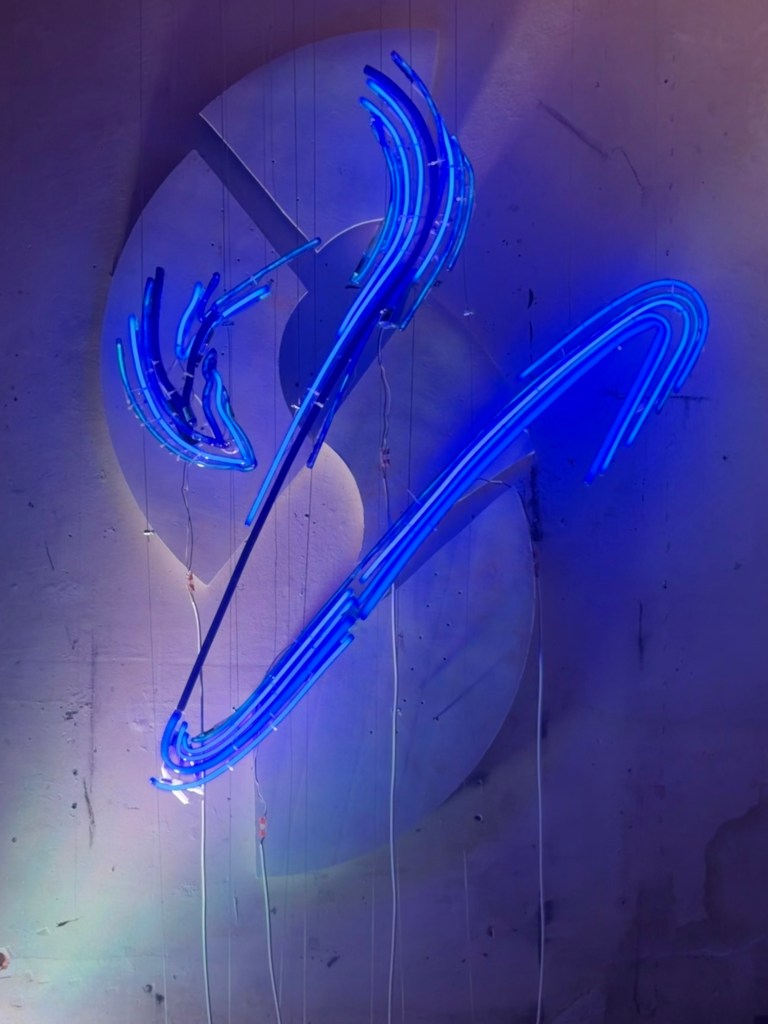
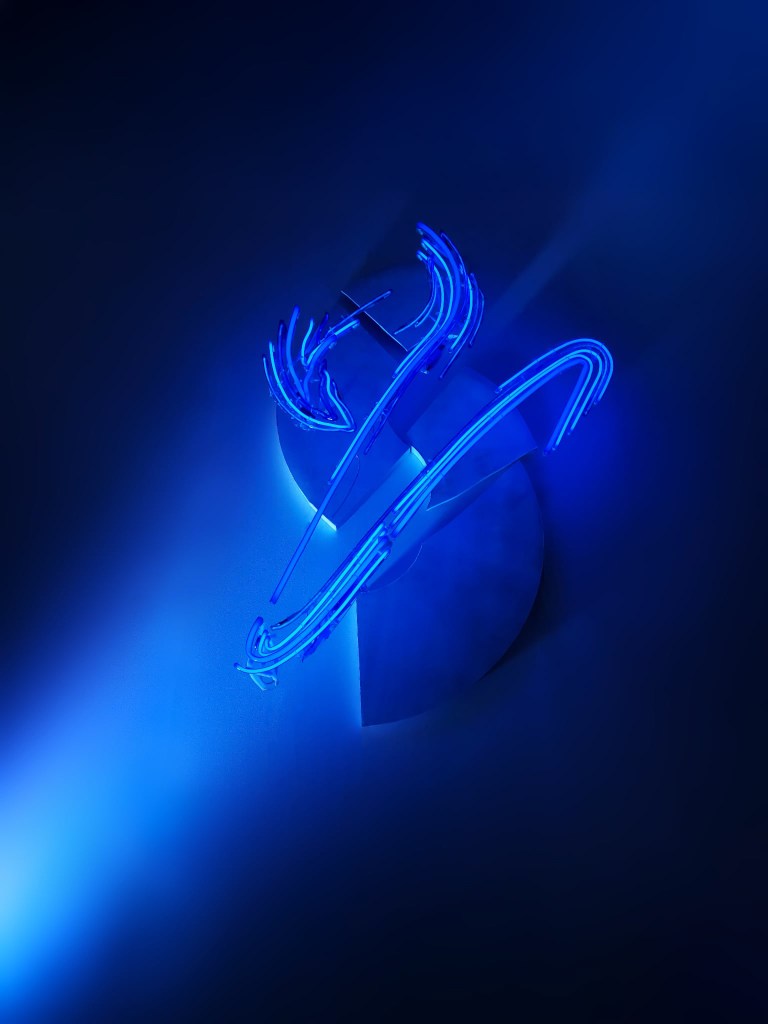
In Terre, the cracked porcelain pieces suspended on the wall and the plaster clay spread across the ground serve as a physical and symbolic extension of the neon forms. These materials—fragile, mineral, and time-worn—evoke a landscape shaped by erosion and regeneration. The neon calligraphic strokes, inspired by characters bearing the 艹 (草花頭) radical, are not simply written into the air—they are imagined as breaking through the ground, like sprouts forcing their way through hardened earth. The porcelain cracks resemble tectonic shifts or soil fractures caused by something alive pushing upward. The clay below receives this energy, becoming both the medium and the memory of growth.
Together, the installation becomes a choreography of tension and emergence: neon as light-root, calligraphy as vegetal force, earth as both resistance and nourishment. Through this, Terre visualizes an ancient process—how something as delicate as a line can pierce, stretch, and transform the material world beneath it.
La plupart des matériaux que j’utilise — verre, porcelaine, argile — proviennent directement de la terre.
Le verre au néon naît du sable, transformé par le feu en lumière ; la porcelaine est façonnée à partir du kaolin, un minéral issu de l’érosion lente du granite sur des millions d’années. Ces matériaux ne sont pas inertes : ils portent en eux le temps géologique, la pression et la transformation.
Cette installation prolonge mon exploration des forces naturelles invisibles (après « Light as Air » et « Courants ») en portant l’attention sur ce que l’on néglige souvent : la solidité et le silence du sol. Pourtant, ce qui semble immobile est en constante évolution.
La terre respire, se fissure, nourrit, et se décompose. Elle garde en mémoire tout ce qui y tombe — qu’il soit organique ou culturel — et le transforme en quelque chose de nouveau.
En utilisant des matériaux issus de la terre et façonnés par des forces élémentaires — chaleur, temps, érosion — je souhaite montrer que même les matériaux les plus contemporains, comme le néon, font partie d’un cycle ancien. Dans un monde obsédé par la vitesse et l’apparence, « Terre » invite à une pause, à regarder vers le bas, à se reconnecter à l’intelligence générative de ce que nous ignorons souvent.

04 FORM
Chinese calligraphy
Inspired by Chinese calligraphy and the theme of earth, this work explores the evolution of Chinese characters representing earth, using glass bending and neon techniques to capture the fluidity and transformation of this vital element.
In Terre, I draw inspiration from the Chinese radical 艹 (草花頭)—a component found in characters related to grass, plants, and natural growth. As a visual and semantic marker, this radical signifies life emerging from the soil: fragile, yet persistent; delicate, yet rooted in the Earth’s resilience.
In Chinese calligraphy, 艹 often crowns characters like 花 (flower), 草 (grass), or 茶 (tea), reminding us that all vegetal life begins from what lies beneath—the unseen ecosystem of roots, minerals, and decomposed matter. By echoing this calligraphic form in neon and ceramic, I’m expressing how language itself can grow from the Earth, just as symbols emerge from gesture, and just as organic forms emerge from soil.
The use of 艹 becomes a poetic bridge between written expression and ecological awareness—showing that our symbols, like our materials, are grounded in nature’s intelligence.
The total amperage of this installation is 0.9A—less than a laptop, which usually consumes 2A!*
*Source from Generator Decision.
Inspirée par la calligraphie chinoise et le thème de la terre, cette œuvre explore l’évolution des caractères chinois liés à cet élément fondamental, en utilisant le cintrage du verre et les techniques du néon pour en saisir la fluidité et la transformation.
Dans « Terre », je m’inspire du radical chinois 艹 (tête d’herbe) — un composant que l’on retrouve dans les caractères liés à l’herbe, aux plantes et à la croissance naturelle. En tant que marqueur visuel et sémantique, ce radical symbolise la vie émergeant du sol : fragile, mais persistante ; délicate, mais enracinée dans la résilience de la terre.
En calligraphie chinoise, 艹 surmonte souvent des caractères comme 花 (fleur), 草 (herbe), ou 茶 (thé), nous rappelant que toute vie végétale commence dans ce qui est enfoui — l’écosystème invisible de racines, de minéraux et de matière décomposée.
En réinterprétant cette forme calligraphique à travers le néon et la céramique, j’exprime l’idée que le langage lui-même peut croître à partir de la terre, tout comme les symboles naissent du geste, et les formes organiques naissent du sol. L’usage du 艹 devient un pont poétique entre expression écrite et conscience écologique — révélant que nos symboles, tout comme nos matériaux, sont ancrés dans l’intelligence de la nature.
L’ampérage total de cette installation est de 0.9A—moins qu’une ordinateur portable standard, qui consomme généralement 2A!*
*Source de Generator Decision.

Special thanks:
Bombarding assistance | Aide à le chargement du gaz: Vito Enseignes
Installation assistance | Aide à l’installation du néon: Frederic Bussiere
Also exhibited at…
01 BRUSSELS
Brassiere Atlas
June 4 – 28, 2025
Curated by Erratum Project

02 PARIS
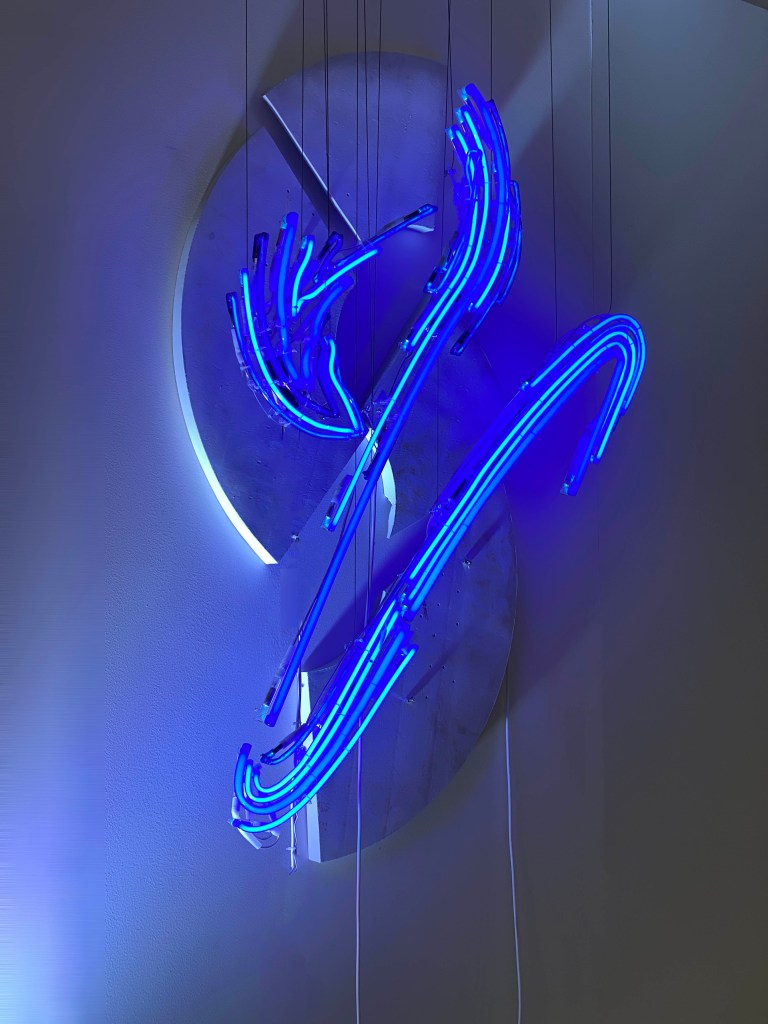
Atelier 11
Jan 12 – Feb 5, 2026
Developed alongside my research at Atelier 11 (Cité Falguière), the work reflects an evolving understanding of technique as a form of survival. Research into the neuroscience of language learning sharpened my awareness of how language is inseparable from technique, and how both depend on adaptation over time. Fire becomes central here: a shared human threshold that enabled transformation, protection, and collective survival—and the same element I rely on daily to bend neon. The flame carries a long history of human agency, shaping how we work, communicate, and evolve together.